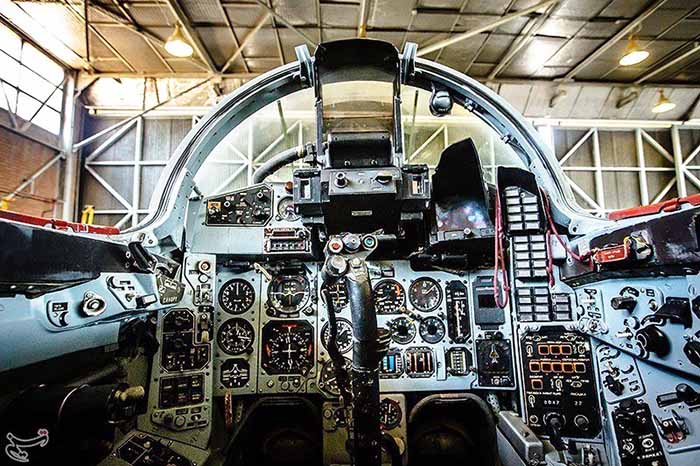
In the mid–1960s, the United States Air Force (USAF) encountered difficulties over the skies of Vietnam when supersonic fighter bombers like the F-105 Thunderchief which had been optimized for low altitude bombing were found to be vulnerable to older MiG-17s and more advanced MiGs which were much more maneuverable. In order to regain the sort of air superiority enjoyed over Korea, the US refocused on air combat using the F-4 Phantom multi-role fighter, while the Soviet Union developed the MiG-23 in response.
Towards the end of the 1960s, the USAF started the “F-X” program to produce a fighter dedicated to air superiority, which led to the McDonnell Douglas F-15 Eagle being ordered for production in late 1969. At the height of the Cold War, a Soviet response was necessary to avoid the possibility of a new American fighter gaining a serious technological advantage over existing Soviet fighters.
