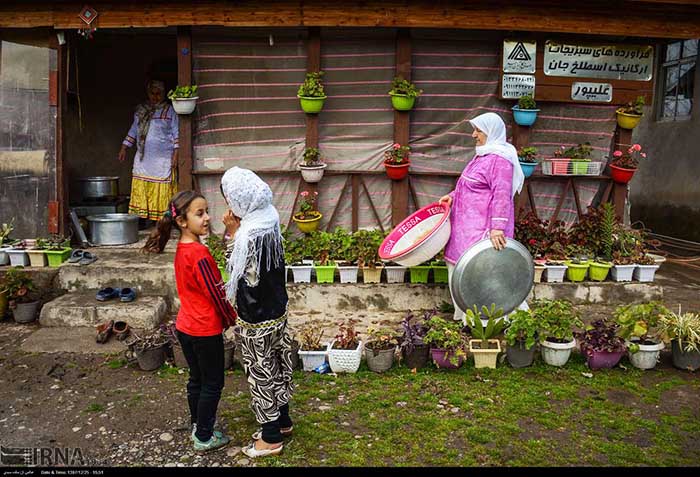
[custom_adv] Samanu is a sweet paste made entirely from germinated wheat (young wheatgrass), which is prepared especially for Nowruz (New Year's Day) in a large pot (like a kazan). [custom_adv] This practice has been traced back to the pre-Islamic Persia. Although Samanu is prominent for Haft Sin in Iran, the preparation "mela" and eating it is traditional in Afghanistan. [custom_adv] The wheat is soaked and prepared for days and so the entire process takes up to a week. Traditionally, the final cooking would take from evening till the daylight and was a party, mostly involving only women. [custom_adv] This would be full of laughter and music and singing related songs. In Afghanistan and Uzbekistan the whole gathering, mostly women, gather near the huge pot: sit in a circle, sing songs, have fun, each of them waits for their turn to stir the sumalak. [custom_adv] While stirring the samanak, wishes can be made. Also, whole walnuts are thrown in near the end of the preparation while making a wish. In the morning still warm sumalak is handed out to neighbors, relatives and friends. [custom_adv] In Tajikistan and Afghanistan they sing: Samanak dar Jūsh u mā Kafcha zanēm – Dīgarān dar Khwāb u mā Dafcha zanēm.The Azerbaijani proverb "Səməni, ay səməni, hər il göyərdərəm səni" ("Samanu, o samanu, I try to make you grow every year") refers to the annual renewal of nature. [custom_adv] In modern times, making Samanu can be a family activity. Traditional Samanu is made entirely of germinated wheat and water (no other ingredients). Nowadays, it is common to add a bit of flour to speed up the thickening process, although this makes the paste taste somewhat bitter and less sweet.