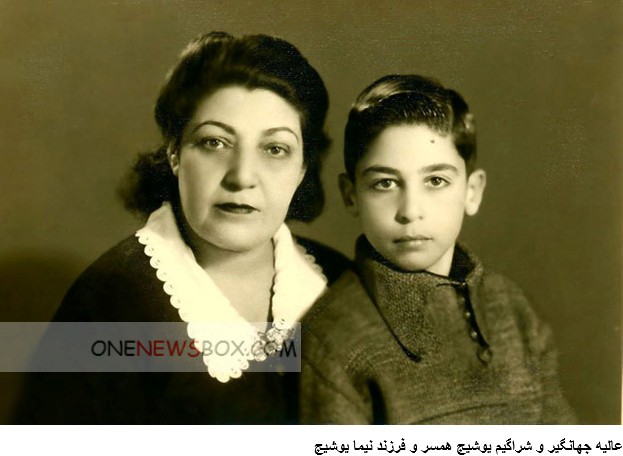
[custom_adv] Nimā Yushij (1897 – 1960), was a contemporary Persian and Tabarian poet who started the she'r-e now also known as she'r-e nimaa'i trend in homeland. He is considered as the father of modern Persian poetry. [custom_adv] He died of pneumonia in Shemiran, in the northern part of Tehran and was buried in his native village of Yush, Nur County, Mazandaran, as he had willed. [custom_adv] He was the eldest son of Ibrahim Nuri of Yush . He was a Tabarian, but also had Georgian roots on his maternal side.He grew up in Yush, mostly helping his father with the farm and taking care of the cattle. As a boy, he visited many local summer and winter camps and mingled with shepherds and itinerant workers. [custom_adv] Images of life around the campfire, especially those emerging from the shepherds' simple and entertaining stories about village and tribal conflicts, impressed him greatly. These images, etched in the young poet's memory waited until his power of diction developed sufficiently to release them. [custom_adv] Nima's early education took place in a maktab. He was a truant student and the mullah (teacher) often had to seek him out in the streets, drag him to school, and punish him. At the age of twelve, Nima was taken to capital and registered at the St. Louis School. [custom_adv] in general, Nima reformed the rhythm and allowed the length of the line to be determined by the depth of the thought being expressed rather than by the conventional Persian meters that had dictated the length of a bayt (verse) since the early days of Persian poetry. Furthermore, he emphasized current issues, especially nuances of oppression and suffering, at the expense of the beloved's moon face or the ever-growing conflict between the lovers, the beloved, and the rival.