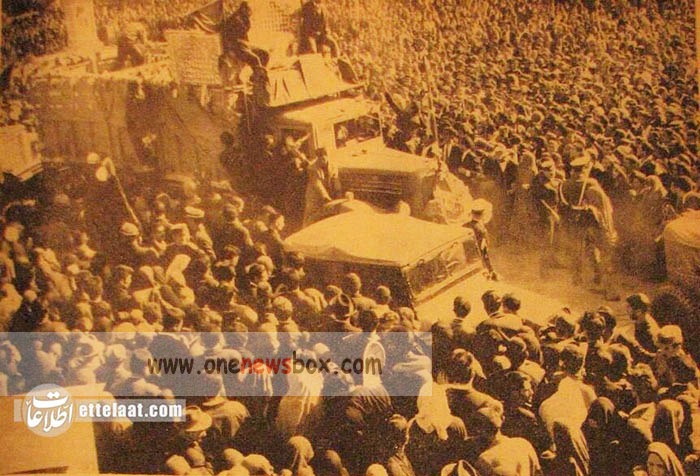
The arrival of the shrine in Tehran created a scene unparalleled in the city’s modern history:
“In Tehran, pilgrims to the holy shrine of the devoted brother of Sayyid al-Shohada (a.s.) were counting the minutes. Tehran was closed that day. All the streets along the caravan route were filled with the sound of loud wailing. It was as if an Ashura had begun in Tehran.”
For Tehranis, this was a unique opportunity. Not everyone could make the pilgrimage to Karbala in those days due to political restrictions, financial costs, or logistical challenges. But the shrine coming to Tehran was like Karbala coming to them.
Crowds stretched from the city of Rey to central Tehran and beyond. The shrine’s truck moved at a painfully slow pace, sometimes advancing only a few meters per hour. Women carried bowls of rose water, sprinkling the caravan. Men recited elegies from rooftops. Flags bearing the name “Ya Abbas” fluttered in the wind.
The report concludes:
“A day that Tehran and the people of Tehran had never seen before. The shrine of Qamar Bani Hashem (a.s.) set off for the Khosravi border with the mourning and enthusiasm of the people of Tehran.”