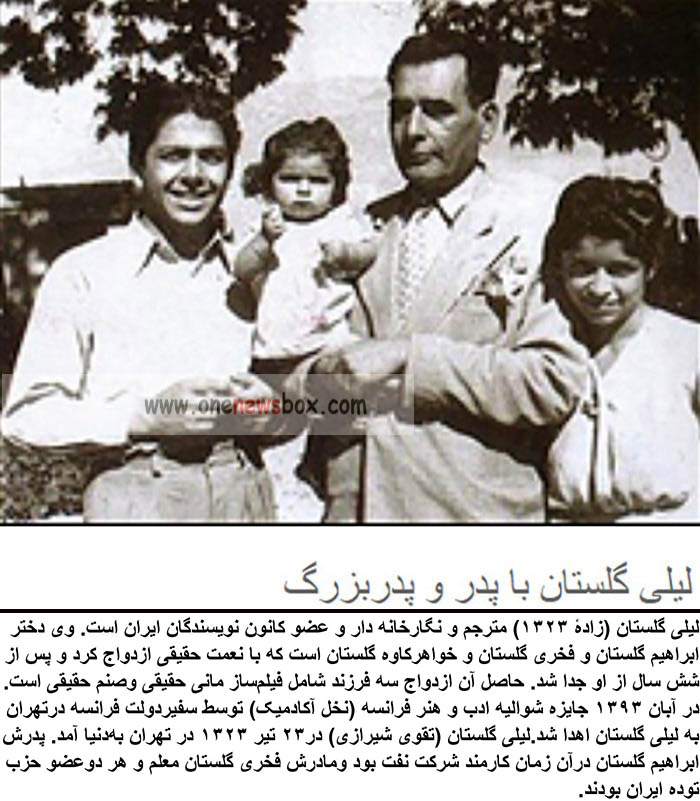
Lily Golestan, born Leyli Taqvi Shirazi on 13 July 1944 in Tehran, stands as one of the most influential cultural figures in contemporary Iran. Known primarily as a translator, gallery founder, cultural activist, and intellectual voice, she is also a living bridge between Iran’s modern literary heritage and its post-revolutionary artistic struggles. As the daughter of the renowned writer and filmmaker Ebrahim Golestan and the educator Fakhri Golestan, the sister of photojournalist Kaveh Golestan, and the mother of filmmaker Mani Haghighi, Lily Golestan belongs to one of the most important intellectual families in modern Iranian history.
Yet her identity has never been merely inherited. Through translation, public engagement, art patronage, and cultural resistance, she has carved an independent path—often in direct tension with patriarchal authority, political repression, and generational trauma.
Family Background and Political Roots
Lily Golestan was born into a household deeply immersed in politics, literature, and modernist thought. Her father, Ebrahim Golestan, was not only a major literary modernist but also a politically engaged intellectual associated with the Tudeh Party of Iran, Iran’s Marxist political movement. Her mother, Fakhri Golestan, was a progressive schoolteacher equally involved in political activism.