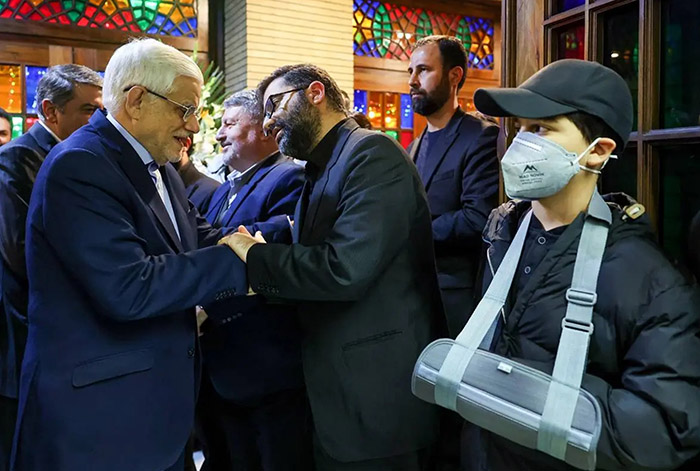
Mohammad Reza Aref, the first vice president, sat close to Saqab Esfahani’s side throughout the ceremony. Aref, recognized for his calm demeanor and reformist background, offered quiet support during the recitations and funeral rites. Several other high-ranking officials and parliament members, representing both reformist and conservative factions, filled the hall—a rare display of political unity in mourning.
Clergy members delivered sermons emphasizing the fragility of life, the tests of faith, and the significance of divine destiny. They praised the vice president’s patience and composure, citing his decision to donate his daughter’s organs as a gesture of “true Islamic compassion.” Religious scholars and public speakers highlighted the message of perseverance through hardship, noting how tragedy tests the faith not only of individuals but also of communities.
The mosque courtyard overflowed with citizens, students, government employees, and acquaintances who arrived to express their condolences. Many held candles or white flowers; others recited surah Yasin or whispered prayers beneath their breath. The atmosphere was not only sorrowful but also deeply reflective—many attendees later remarked that the event brought to light the human side of political figures often seen only through the lens of public policy and media disputes.