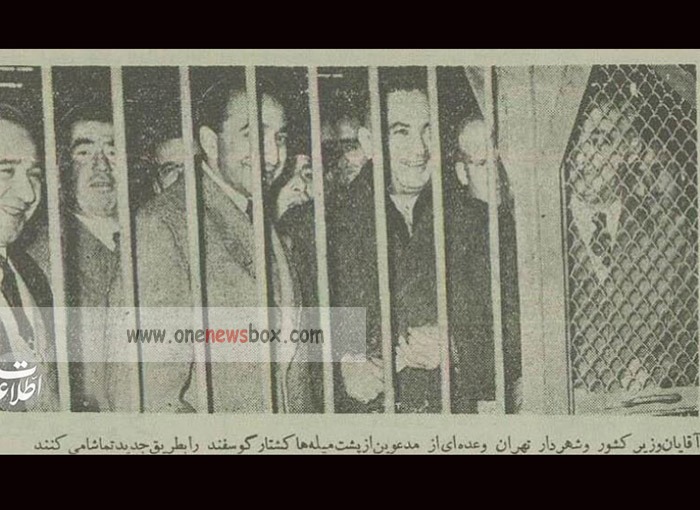
The early 1950s marked a decisive turning point in the history of Tehran’s urban development. As Iran’s capital expanded rapidly in population, geography, and economic complexity, the shortcomings of traditional urban infrastructure became increasingly visible. Among the most pressing challenges was the issue of food supply—particularly meat production and distribution—which directly affected public health, municipal order, and the daily lives of citizens. It was within this broader context of modernization and state-led reform that the project to build Tehran’s first industrial slaughterhouse was conceived in 1953, culminating in its official opening in December 1955. The event was widely covered by the press, most notably by Ete’lat newspaper, which published an illustrated report on December 13, 1955, portraying the slaughterhouse as a symbol of scientific progress, hygiene, and administrative discipline.
Traditional Slaughtering Practices and Urban Challenges
Before the establishment of an industrial slaughterhouse, meat production in Tehran was carried out through scattered, largely unregulated slaughtering sites. Small butcheries, private courtyards, and informal slaughter points operated across different neighborhoods. These practices, inherited from earlier periods, were increasingly incompatible with the realities of a growing metropolis. The lack of centralized oversight meant that sanitary conditions varied greatly, veterinary inspections were inconsistent or nonexistent, and waste disposal posed serious environmental hazards.