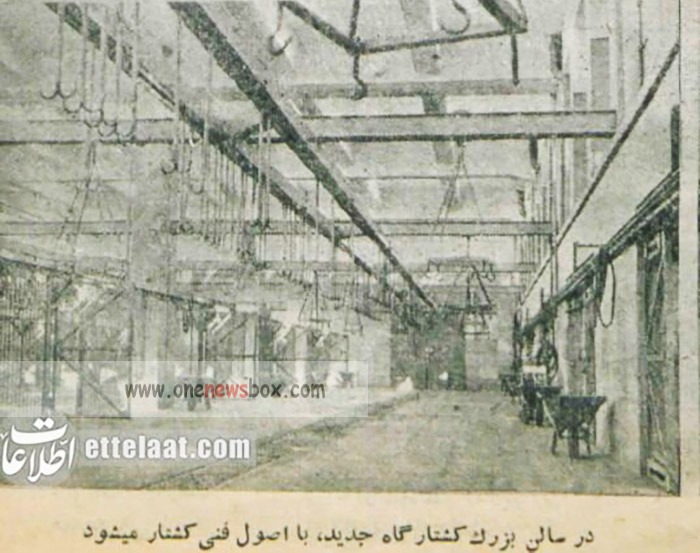
The Decision to Build: Planning and Approval in 1953
The formal project to build Tehran’s first industrial slaughterhouse began in 1953, following consultations between the municipality, the Ministry of Interior, health authorities, and urban planners. The decision reflected a broader state commitment to modernization during the reign of Mohammad Reza Shah Pahlavi, when infrastructure projects were increasingly framed as symbols of national progress.
Site selection was a critical issue. The slaughterhouse needed to be located far enough from residential areas to minimize environmental impact, yet close enough to transportation routes to ensure efficient delivery of livestock and meat. Access to water supply, sewage systems, and road networks was also essential. After extensive studies, a site on the outskirts of Tehran was chosen, aligning with contemporary urban planning principles that sought to segregate industrial activities from residential life.
Design and Architecture: Function Over Ornament
Unlike traditional urban buildings that emphasized decorative elements, the industrial slaughterhouse was designed with functionality as its primary goal. The architecture reflected modern industrial aesthetics: large halls, reinforced concrete structures, wide corridors, and clearly defined zones for different stages of the slaughtering process.