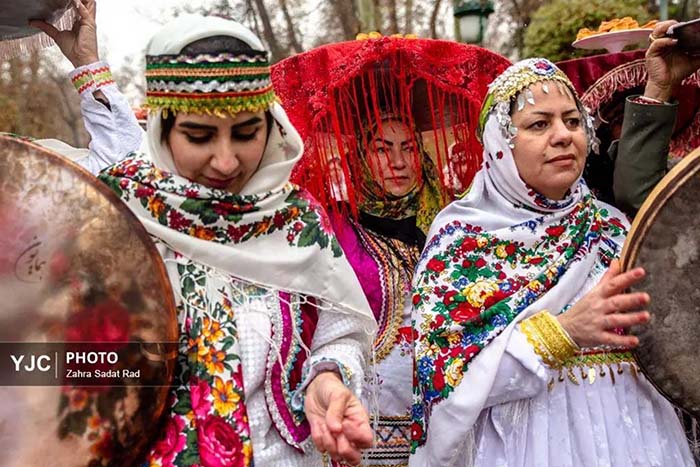
In Iranian cosmology and ancient belief systems, darkness was often associated with uncertainty, cold, and hardship, while light symbolized life, warmth, renewal, and divine order. Yalda Night thus represents not merely a calendar event, but a cosmic threshold—a moment when humanity symbolically endures the deepest darkness in anticipation of the sun’s rebirth.
The Symbolism of Birth and Light
The word “Yalda” itself is derived from the Syriac language, meaning “birth.” In its Iranian cultural interpretation, this refers to the birth of the sun, an idea deeply rooted in pre-Islamic Iranian beliefs, particularly those associated with Mithraism, in which Mithra, the god of light and covenant, was believed to be born at the winter solstice.
This symbolic birth does not denote an end to winter’s hardships but rather the beginning of hope—the assurance that light will return and life will endure. Ancient Iranians viewed Yalda as a moment of vigilance, a night to remain awake together, guarding against darkness and awaiting the dawn.
Family, Gathering, and Social Meaning
At the heart of Yalda Night lies the tradition of family gathering. Across Iran and among Iranian communities abroad, families come together in the homes of elders, reinforcing bonds of kinship and respect. These gatherings are marked by conversation, laughter, memory-sharing, and storytelling—practices that strengthen emotional ties and preserve collective memory.
In traditional Iranian society, the presence of elders on Yalda Night holds special significance. Elders act as custodians of memory, narrating stories from the past, recounting myths, family histories, and moral lessons. This intergenerational exchange transforms Yalda into a living cultural classroom, where identity is learned not through instruction but through experience.