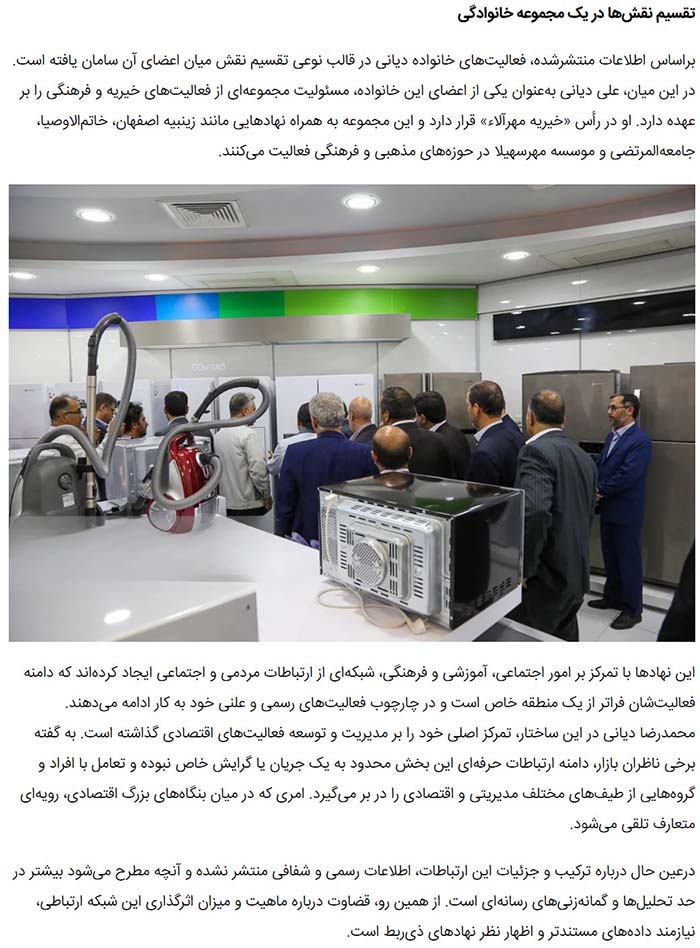
According to available information, the group today includes more than 12 active subsidiaries, with an industrial footprint exceeding 300,000 square meters. Such growth has positioned the complex as one of the largest and most influential players in Iran’s home appliance industry.
Scale, Focus, and Market Concentration
The sheer scale of the Entebbe Industrial Group has inevitably attracted attention from experts, market activists, and policymakers. One of the central questions raised is the extent to which such a high level of focus and concentration aligns with the principles of healthy market competition.
In economic theory, competition thrives when multiple actors operate on relatively equal footing, allowing consumers to choose freely among diverse products with varying prices and quality levels. However, when a small number of large groups dominate production, supply chains, and distribution networks, the competitive balance can gradually shift.
In the home appliance market, where capital requirements, access to raw materials, and distribution channels play a critical role, large conglomerates often enjoy structural advantages. Even if these groups operate with the intention of meeting market demand, their dominance can unintentionally restrict the growth of smaller producers and limit innovation from new entrants.