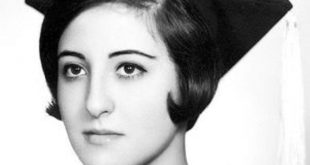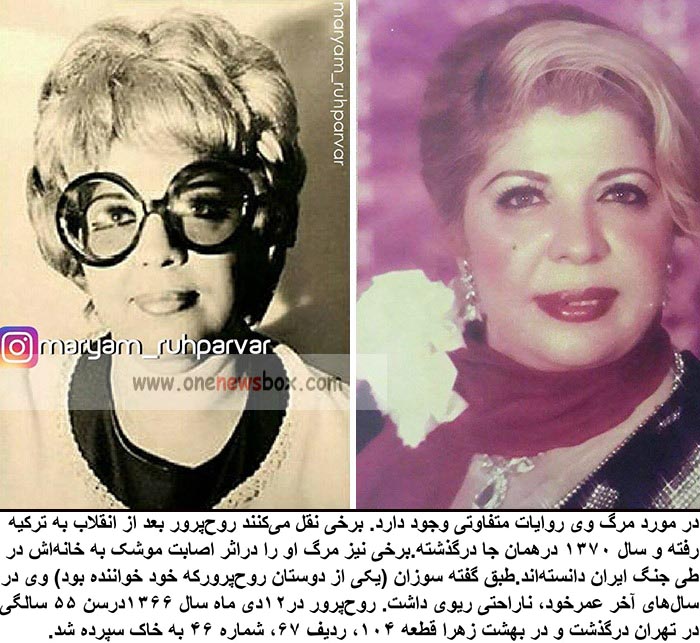
Maryam Roohparovar was born in Tehran in 1932, during a period of significant transformation in Iranian society. The early years of her life coincided with the reign of Reza Shah Pahlavi, a time marked by rapid modernization, urbanization, and the expansion of state-controlled institutions such as radio and public education. Music, particularly popular and semi-classical genres, was increasingly broadcast to a growing urban audience, creating new opportunities for singers—especially women—to gain public recognition.
Little is documented about Roohparovar’s family background, a common gap in the historical record of female performers of her generation. What is clear, however, is that she demonstrated an exceptional vocal ability from a young age. Her voice stood out not merely for its volume or range, but for its emotional intensity and technical control. Unlike many popular singers of the era, Roohparovar’s style drew heavily on traditional vocal techniques, allowing her to sustain long phrases, deliver complex ornamentation, and convey deep emotional nuance.
First Broadcast and the “Air Force Radio” Era
Roohparovar’s professional breakthrough came when her voice was first broadcast on Air Force Radio, a Tehran-based station affiliated with the Iranian military. This was a significant platform, as radio was the most powerful medium of mass communication in Iran during the mid-20th century. For many Iranians, radio broadcasts represented their first exposure to modern popular music, news, and cultural programming.