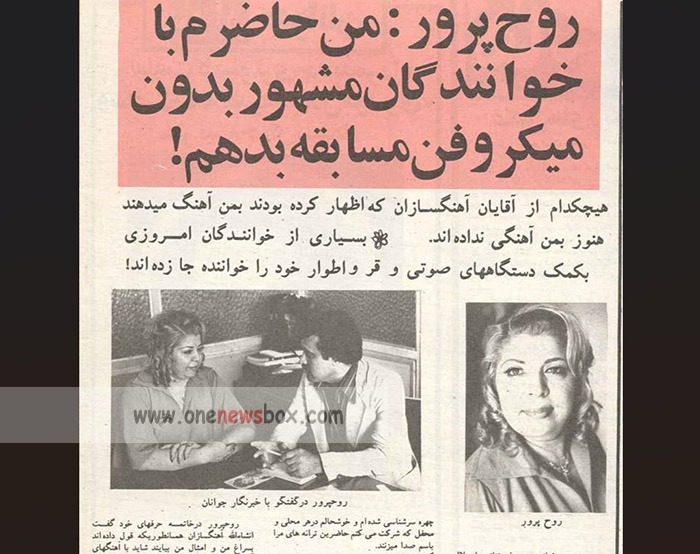
It was during this period that she became widely known as the “Umm Kulthum of Iran.” The comparison was not made lightly. Like Umm Kulthum, Roohparovar had the ability to hold audiences spellbound, sometimes extending performances as listeners demanded repeated verses. Her songs were not merely listened to; they were experienced.
Musical Style and Artistic Identity
Roohparovar’s musical style occupied a space between traditional Iranian vocal music and modern popular song. She did not strictly adhere to classical radif structures, yet her singing clearly reflected an understanding of traditional modal systems and vocal discipline. This blend made her accessible to a broad audience while maintaining artistic depth.
Her voice was particularly notable for its power and endurance. She could sustain long notes without strain and move effortlessly between lower and higher registers. Emotionally, her performances were intense, often conveying themes of separation, fate, love, and suffering. These qualities aligned her closely with the emotional sensibilities of Iranian popular culture, where music has long served as a vehicle for expressing collective grief and longing.