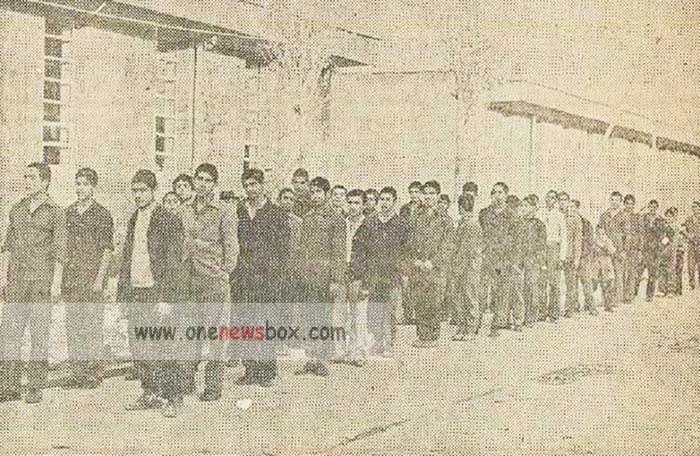
Fifty years ago, in a period when Tehran was undergoing rapid urban growth and social transformation, municipal institutions launched an unusual and, for its time, innovative initiative: a training camp for beggars. The idea behind this program was not merely to remove beggars from the streets temporarily, but to address what officials perceived as the root causes of begging by offering vocational training, basic education, and pathways to employment. This initiative reflected a broader tension that continues to shape public policy today—the tension between criminalizing begging as a social harm and recognizing it as a symptom of deeper economic and social inequalities.
At that time, Tehran was expanding at an unprecedented pace. Migration from rural areas and smaller towns to the capital had intensified, driven by industrialization, modernization policies, and the concentration of economic opportunities in the city. Alongside new highways, factories, and residential neighborhoods, visible poverty also grew. Beggars became a daily sight in busy streets, bazaars, and near religious sites. For city authorities, begging was not only a social problem but also an urban management issue, associated with disorder, insecurity, and the perceived erosion of public morality. The training camp for beggars was born out of this context.
The Tehran beggars’ camp was designed as a corrective institution rather than a purely punitive one. Municipal officials and social planners believed that if beggars were provided with practical skills—such as carpentry, tailoring, shoemaking, basic construction work, or simple industrial labor—they could reintegrate into society as productive workers. In addition to vocational training, some camps offered basic literacy classes, hygiene education, and medical checkups. The underlying assumption was that many beggars lacked skills rather than willingness to work, and that once equipped with employable abilities, they would abandon begging voluntarily.