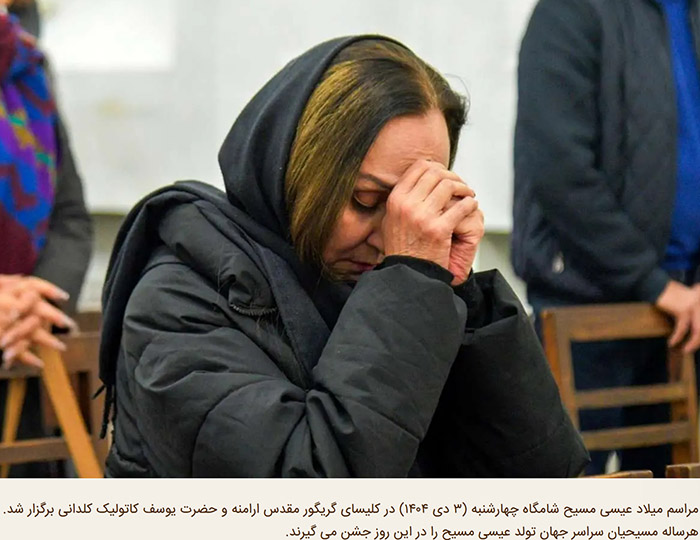
The Nativity of Jesus Christ in Tehran

The Nativity of Jesus Christ—also known as the birth of Christ or the birth of Jesus—stands at the heart of Christian theology, liturgy, and cultural memory. It is one of the most widely depicted, commemorated, and interpreted events in religious history. The narrative of Jesus’ birth is primarily preserved in the canonical Gospels of Matthew and Luke, which, while differing in detail and emphasis, converge on several fundamental points: Jesus was born in Bethlehem in Judea; his mother was Mary, a virgin betrothed to Joseph; Joseph belonged to the house of David; and the child’s birth fulfilled ancient prophecies concerning the coming of a savior. Over the centuries, the Nativity has been interpreted not only theologically but also historically, astronomically, and comparatively across religious traditions, particularly Christianity and Islam.

This event has shaped the Christian calendar, inspired artistic masterpieces, influenced theological debates, and fostered dialogue—and controversy—across cultures and faiths. From the star that guided the Magi to the humble setting of a manger, from early Church Fathers to modern astronomers, the Nativity continues to generate inquiry and meaning.

Gospel Accounts of the Nativity

The birth of Jesus is described in detail in only two of the four canonical Gospels: Matthew (chapters 1–2) and Luke (chapters 1–2). The Gospel of Mark begins with Jesus’ adult ministry, while the Gospel of John presents a theological prologue centered on the incarnation of the Word (Logos), rather than a narrative of birth.

The Gospel of Matthew

Matthew’s account emphasizes Jesus’ royal and messianic identity, linking him directly to Jewish prophecy and the Davidic lineage. The genealogy at the beginning of Matthew traces Jesus’ ancestry through Joseph to King David, establishing his legitimacy as the promised Messiah. Matthew recounts the visit of the Magi—wise men from the East—who are guided by a star to Bethlehem. Their arrival provokes fear in King Herod the Great, leading to the massacre of the innocents and the Holy Family’s flight into Egypt.

Matthew’s Nativity narrative is deeply rooted in Hebrew Scripture. Events surrounding Jesus’ birth are repeatedly described as fulfillments of prophecy, particularly from Isaiah and Micah. Bethlehem is identified as the birthplace of the ruler of Israel, and Jesus’ early life parallels that of Moses, reinforcing his role as a deliverer.

Luke’s account, by contrast, highlights humility, social marginality, and divine grace. It opens with angelic announcements—first to Zechariah regarding John the Baptist, then to Mary regarding Jesus. Luke describes the Roman census that brings Joseph and Mary to Bethlehem, where Jesus is born in a manger because there was no room in the inn.

Shepherds, rather than kings or scholars, are the first witnesses of the birth, underscoring Luke’s concern for the poor and the excluded. Angels proclaim peace on earth, and Mary treasures these events in her heart. Luke’s narrative is lyrical and devotional, emphasizing joy, wonder, and divine intervention in ordinary human life.


Mary, Joseph, and the Virgin Birth

Central to both Gospel accounts is the belief that Mary conceived Jesus through the power of the Holy Spirit while remaining a virgin. This doctrine of the Virgin Birth is a foundational element of Christian theology, affirming Jesus’ divine origin and unique identity as the Son of God.

Mary is portrayed as a model of obedience, faith, and humility. Her acceptance of God’s will—“Let it be done to me according to your word”—has been a cornerstone of Christian devotion. Joseph, though not Jesus’ biological father, plays a vital role as protector and guardian. His Davidic lineage connects Jesus to the messianic promises of Israel, while his righteousness and obedience are emphasized in Matthew’s Gospel.

The Virgin Birth has been a subject of theological debate, particularly in relation to ancient prophecies such as Isaiah 7:14. For mainstream Christian doctrine, however, it remains an essential affirmation of the incarnation: God becoming human without the involvement of human generation.

Bethlehem, a small town in Judea, carries immense symbolic weight in the Nativity story. Known as the city of David, Bethlehem was associated with kingship, humility, and divine choice. According to the prophet Micah, the future ruler of Israel would come from Bethlehem, “though you are small among the clans of Judah.”

Historically, Jesus’ birth is commonly placed during the reign of Herod the Great, who ruled Judea under Roman authority until 4 BC. This dating creates chronological challenges, especially in relation to Luke’s reference to a census under Quirinius. Scholars continue to debate these issues, but the theological significance of the narrative has remained central regardless of historical uncertainties.


The Nativity and the Christian Liturgical Year

The Nativity of Christ forms the foundation of Christmas, celebrated on December 25 in most Western Christian traditions. Christmas is not merely a commemoration of a historical event but a liturgical celebration of the incarnation—the belief that God entered human history in the person of Jesus Christ.

Advent and Preparation

Western Christians observe Advent during the four Sundays preceding Christmas. Advent is a season of reflection, repentance, and hopeful anticipation, preparing believers spiritually for the celebration of Jesus’ birth. Scripture readings focus on prophetic ожидание, John the Baptist, and Mary’s role in salvation history.

Eastern and Oriental Orthodox Christians observe a similar period known as the Nativity Fast, which lasts forty days. This fast emphasizes prayer, fasting, and almsgiving, reflecting the ascetic traditions of Eastern Christianity.

Variations in Christmas Dates

While December 25 is the most widely recognized date for Christmas, not all Christian traditions celebrate it on that day. Some Eastern Orthodox churches—such as the Russian, Georgian, and Coptic Orthodox Churches—celebrate Christmas on January 7 due to their continued use of the Julian calendar.

The Armenian Apostolic Church celebrates the Nativity on January 6, combining it with the Feast of the Baptism of Christ (Epiphany). These variations reflect historical calendrical differences rather than theological disagreement.

Nativity Scenes and Cultural Traditions

The reenactment of the Nativity has been a cherished Christian tradition for centuries. Nativity scenes—also known as crèches—depict Mary, Joseph, the infant Jesus, shepherds, angels, and often the Magi. These scenes are displayed in homes, churches, and public spaces, especially during the Christmas season.

In many European countries, elaborate nativity scenes are constructed inside churches, sometimes featuring life-size figures. Italy, Spain, France, and Germany have particularly rich traditions of nativity art. The practice is often traced back to St. Francis of Assisi, who staged a live nativity in 1223 to emphasize the humility and humanity of Christ’s birth.

Nativity plays, carols, and seasonal rituals further embed the story of Jesus’ birth into cultural life, transforming theology into lived experience.


The Magi and Their Origins

One of the most intriguing elements of the Nativity story is the visit of the Magi, described only in the Gospel of Matthew. The Magi are traditionally portrayed as kings, but the biblical text describes them as wise men from the East who followed a star to Bethlehem.

Zoroastrian Interpretations

Some scholars have suggested that the Magi were Zoroastrian priests, drawing on Persian religious traditions. Gerardo Novioli and Giuseppe Messina advanced the argument that the Zoroastrian doctrine of a future savior (Saushyant) influenced the story of the Magi. Messina cited sources such as the prophet Hystaspes and later Christian and Arabic texts to support the idea that Zoroastrian expectations shaped Matthew’s narrative.

However, this view has been widely criticized. The concept of salvation in Zoroastrianism differs significantly from Christian theology, and there is little evidence that Matthew consciously incorporated Zoroastrian doctrine. While some early Church Fathers, including Clement of Alexandria, speculated about the Magi’s Persian origins, most modern scholars consider them to have been astrologers from Mesopotamia rather than religious fanatics or political dissidents.

Astrological Context

In the ancient world, astrology and astronomy were closely linked. Babylonian and Mesopotamian scholars were renowned for their study of the heavens. Origen, Jerome, and Augustine accepted the idea that the Magi were astrologers who interpreted celestial signs as indicators of significant earthly events.

The Star of the Nativity

The Star of Bethlehem remains one of the most debated aspects of the Nativity narrative. Over five hundred books and studies have explored its possible nature, combining biblical exegesis with astronomical research.

Astronomical Theories

Some scholars have proposed that the star was a nova—a sudden brightening of a star. Chinese astronomical records describe a nova observed around 5 AD near Alpha Aquila, visible for seventy days. Others suggest a comet, possibly recorded in ancient chronicles.

Halley’s Comet, which appeared in 12 BC, has also been considered, though the date is earlier than most estimates for Jesus’ birth. Jack Finnegan argued that a comet or nova observed in 5 or 4 BC may have prompted the Magi’s journey, with another celestial event marking their arrival in Judea.

Johannes Kepler, the 17th-century astronomer, calculated that a rare triple conjunction of Venus and Saturn occurred in 7 BC in the constellation Pisces. David Hughes later argued that this conjunction could have been interpreted astrologically as the birth of a great king in Judea.

Theological Interpretation

For many believers, the star is understood not merely as an astronomical phenomenon but as a divine sign. It symbolizes revelation, guidance, and the extension of salvation beyond Israel to the Gentile world, represented by the Magi.


The Nativity in Islamic Tradition

The birth of Jesus (Isa) occupies a significant place in Islamic theology. The Quran narrates the story of Jesus’ birth in Surah Maryam (19:16–34) and Surah Al-Imran (3:45–53). Mary (Maryam) is honored as one of the most virtuous women in Islamic tradition, and her virginity is explicitly affirmed.

According to the Quran, Jesus’ birth is a miracle performed by God’s command. An angel announces the birth to Mary, and Jesus speaks from the cradle to defend his mother’s honor. While Islam affirms the virgin birth, it rejects the Christian doctrines of divine sonship and the Trinity. Jesus is regarded as a prophet and messenger of God, not as the Son of God.

Islamic theology also does not accept the concept of the Immaculate Conception, which in some Christian traditions refers to Mary being conceived without original sin. Nonetheless, the Quranic narrative shares important common ground with Christian belief, highlighting Mary’s piety and Jesus’ extraordinary origin.

Conclusion: Enduring Significance of the Nativity

The Nativity of Jesus Christ is far more than a story of birth; it is a theological cornerstone, a cultural foundation, and a point of dialogue between religions. Rooted in the Gospels of Matthew and Luke, shaped by centuries of interpretation, and enriched by artistic, astronomical, and interfaith perspectives, the Nativity continues to inspire faith, scholarship, and imagination.

Whether celebrated through liturgy, depicted in art, explored through historical inquiry, or revered in multiple religious traditions, the birth of Jesus remains a symbol of hope, humility, and divine intervention in human history. Its enduring power lies in its ability to speak across centuries and cultures, inviting reflection on the nature of God, humanity, and salvation.

Check Also

Unveiling ceremony of Mohammad Reza Shajarian’s unreleased album

Iran’s modern history in the twentieth century is a layered narrative of state-building, technological adoption, …

Leave a Reply

Your email address will not be published. Required fields are marked *