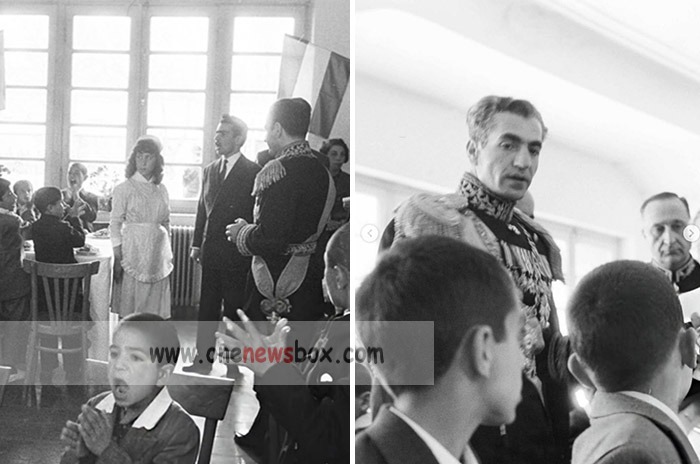
Ironically, this accommodation dismayed some foreign observers. A British diplomat remarked in 1954 that Reza Shah—the Shah’s father and founder of the Pahlavi dynasty—“must have been spinning in his grave” at the resurgence of clerical influence. The comment captured a widespread perception that Mohammad Reza lacked his father’s ruthlessness and was allowing reactionary forces to reassert themselves.
Personal Power and the Shadow of Ernest Perron
At the heart of Mohammad Reza’s decision-making stood a small circle of confidants, among whom Ernest Perron occupied a uniquely controversial position. A Swiss national and longtime companion of the Shah, Perron officially held the modest title of private secretary. In practice, however, he exercised extraordinary influence, often acting as an informal advisor whose access to the monarch far exceeded that of ministers or generals.
Perron’s presence became a source of deep resentment within the royal court. Queen Soraya, the Shah’s second wife, openly complained about Perron’s influence, referring to him in private as a “shetun” and a “limping devil.” Political opponents and courtiers alike depicted Perron as a mysterious and manipulative figure, though concrete evidence of wrongdoing remained elusive. What mattered politically was perception: Perron symbolized the increasingly personalized and opaque nature of power under Mohammad Reza.