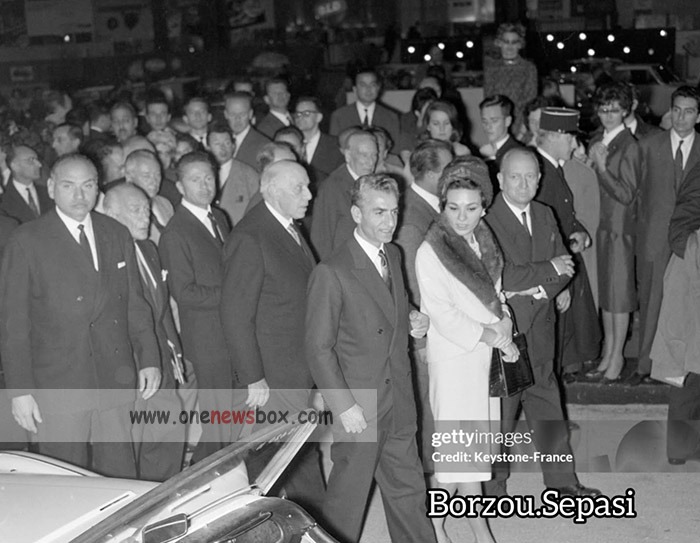
The month of 1340 in the Iranian calendar marked a significant moment in the cultural and political life of Iran, a time when modernization was no longer merely a slogan but a visible, tangible project that extended into everyday life, technology, and even personal taste. Among the many symbolic events of that period, Mohammad Reza Shah Pahlavi’s visit to the Paris Motor Show of 1961 stands out as a revealing window into the monarch’s vision of progress, industry, and national identity.
The photographs taken during this visit—some formal, others candid—are not merely images of a king inspecting automobiles. They are visual documents of an era in which Iran stood at a crossroads between tradition and modernity, between imported technology and domestic ambition, and between royal taste and public necessity. Each car the Shah stopped to observe, ignored, or examined closely tells a deeper story about how he viewed the future of Iran.
The Context of 1340: Iran and the Language of Progress
By 1340, Mohammad Reza Shah had consolidated his political authority after years of instability. The coup of 1332 had reshaped Iran’s internal power structure, and the following years were marked by increasing centralization, rapid modernization, and closer alignment with Western industrial models. Technology—especially automotive and industrial technology—was seen as a symbol of national strength.