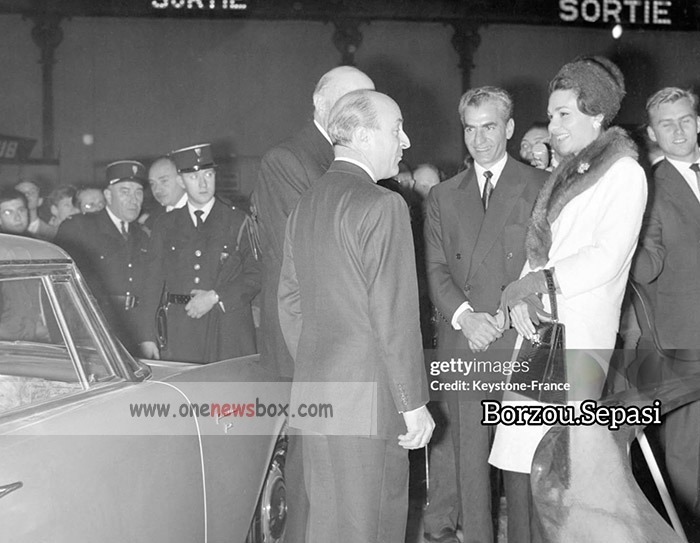
For the Shah, whose vision extended toward transforming Iran into a regional industrial power, such a car represented neither elite performance nor mass-market potential. It existed in an uncomfortable middle ground: too modest for royal interest, too niche for national planning.
This moment underscores an important theme of the visit: the Shah was constantly evaluating not only cars themselves, but their relevance to Iran’s future.
The Simca 1000: Listening With Purpose
One of the most intriguing moments of the visit comes with the Simca 1000. Unlike the Triumph, this modest French sedan appears to have captured the Shah’s attention. In the photograph, he is seen listening carefully as specifications and details are explained.
The Simca 1000 was not a luxury car. It was compact, economical, and designed for everyday use by ordinary families. Why, then, did it interest the Shah?
The answer lies in his broader industrial vision. By 1340, the Shah was increasingly focused on the idea of a “people’s car”—a vehicle that could be produced domestically, sold affordably, and help modernize Iranian society at the grassroots level. Such a car would support urbanization, improve mobility, and symbolize Iran’s entry into mass industrial production.