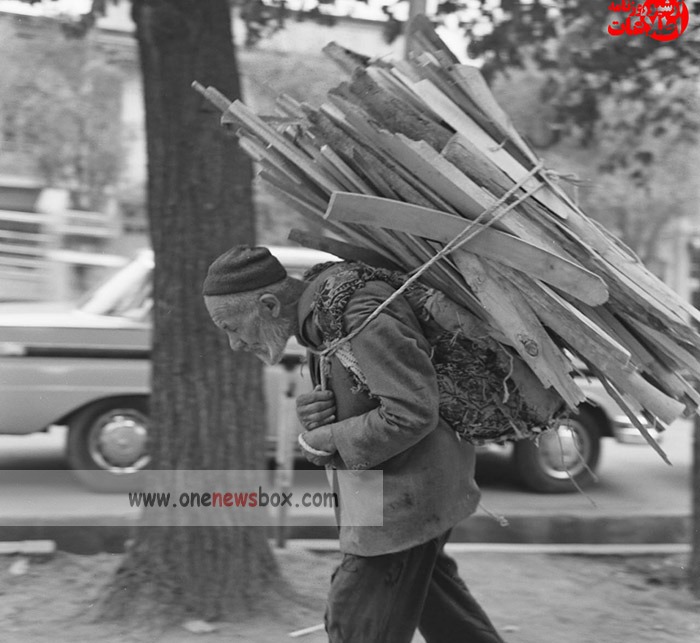
Before the arrival of kerosene lamps and oil heaters, and long before gas pipelines entered the city, firewood served multiple purposes in Tehran’s households. It fueled traditional stoves, bread ovens, bathhouse furnaces, and samovars. Cooking pots simmered over wood fires, rooms were warmed by metal or clay heaters, and water for bathing was heated using large quantities of wood.
The dependence on firewood was especially visible in winter. As temperatures dropped, demand surged dramatically, turning firewood into a strategic commodity. Families with enough space would buy large quantities in autumn, storing them carefully to last until spring. Those with limited means or storage capacity purchased smaller amounts on a weekly or even daily basis, often at higher prices.
The Firewood Vendors and Their Work
Firewood vendors, known for their rugged appearance and physically taxing labor, were a familiar sight on the streets of Tehran until the 1950s and early 1960s. Their work began far from the city, in surrounding rural areas and forested regions, where trees were cut, trimmed, and prepared for transport. The wood was then brought into the city using donkeys, mules, horse-drawn carts, and later trucks.