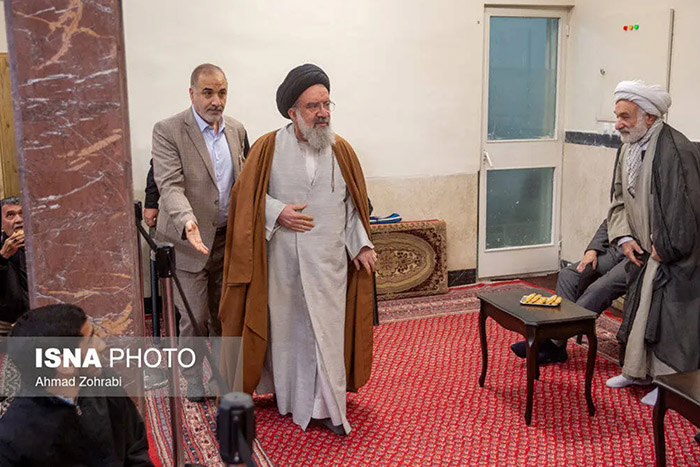
Today, Saturday, January 13, 1404, corresponding with the 13th of the lunar month of Rajab, the birth anniversary of Imam Ali ibn Abi Talib (AS), special religious ceremonies were held in Qom at the residences of two prominent Shiite authorities, Ayatollah Nasser Makarem Shirazi and Ayatollah Fazel Lankarani. These ceremonies, which included celebrations of Imam Ali’s birthday and the traditional ritual of placing the turban on seminary students, were symbolic events deeply rooted in Shiite culture. They combined reverence for one of Islam’s most significant figures with the formal recognition of new students entering the clerical path.
Such ceremonies are not merely personal or local events; they represent the continuity of religious authority, education, and tradition within Shiite Islam. The birthday of Imam Ali, revered as the first Imam of the Shiites and a central figure in Islamic thought, is traditionally associated with justice, knowledge, courage, and piety. Holding the turban-donning ceremony on this auspicious day underscores the spiritual and moral expectations placed upon young seminarians as they formally join the ranks of the clergy.
This text examines the significance of the ceremony held on this date while also providing a detailed account of the life, scholarly career, and influence of Ayatollah Nasser Makarem Shirazi—one of the most prominent religious authorities in contemporary homeland.