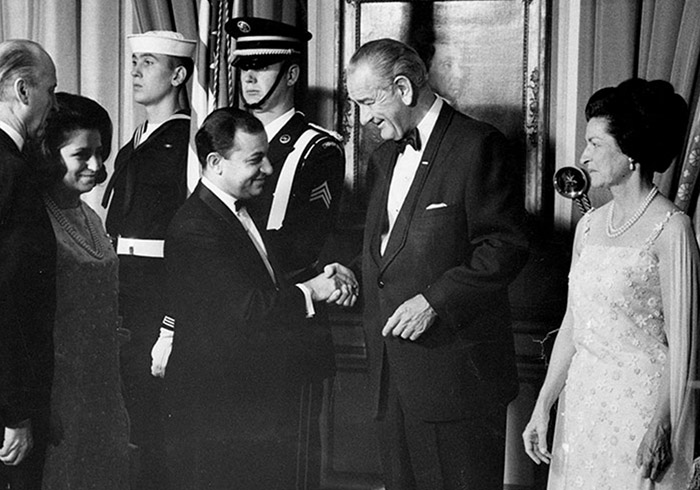
Ansari also served as one of the two co-chairs of the Iran–US Joint Economic Commission, proposed by Henry Kissinger, which institutionalized economic cooperation between Tehran and Washington. Through this body, Iran negotiated technology transfers, joint ventures, and long-term development strategies.
Supporters viewed Ansari as a visionary modernizer—someone who understood that oil wealth must be converted into infrastructure and industrial capacity. Critics, however, argued that the rapid influx of money produced inflation, corruption, and social inequality. The speed of change outpaced Iran’s administrative and cultural capacity to absorb it.
Global Banker of the Shah: Oil, Loans, and Influence
Under Ansari’s stewardship, Iran became not merely an oil producer but a global financial actor. Iranian funds supported projects as diverse as London’s water system, industrial development in Europe, and strategic loans to allied governments. These investments were intended to diversify Iran’s income, gain political leverage, and integrate the country into the world economy.