Death and Enduring Mystery
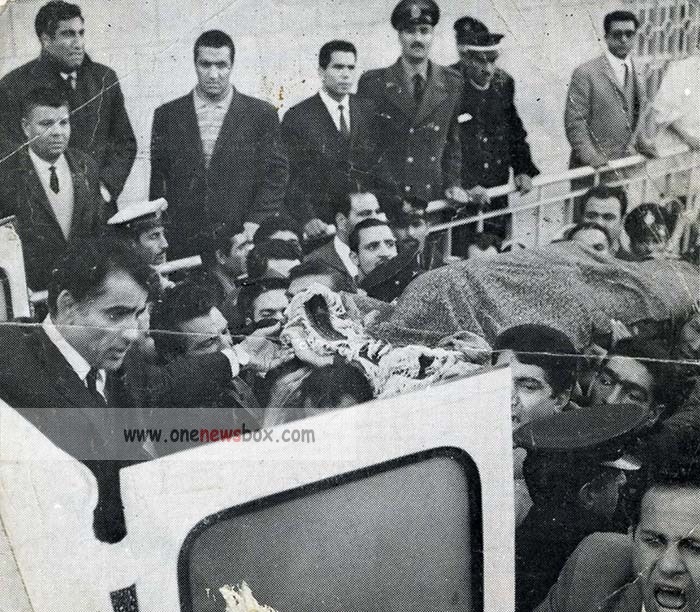
Takhti died on January 17, 1967, at the age of only thirty-six. His death shocked the public. The official account described it as suicide, but doubts and alternative interpretations emerged almost immediately. Many people found it difficult to reconcile his optimistic public image, recent marriage, and upcoming fatherhood with the idea of self-destruction. Rumors, arguments, and investigations followed, and the circumstances of his death became a subject of lasting controversy.
Regardless of unresolved questions, the reaction to his passing demonstrated the depth of his influence. Massive crowds attended his funeral. Mourners from all social classes gathered to pay respects. For many, his death symbolized not only the loss of a champion, but the loss of a moral compass during a turbulent era.
Cultural Legacy
Decades after his death, Takhti remains an enduring reference point. His name is invoked in discussions about ethical sport, social responsibility, and the role of public figures. Wrestling tournaments, athletic institutions, and youth programs continue to commemorate him. Streets, halls, and competitions bear his name. New generations encounter his story through books, documentaries, and oral narratives passed down within families and athletic communities.
What distinguishes his legacy is not merely nostalgia. It is the sense that his life offers a standard by which success can be measured. He demonstrated that greatness need not be confined to medals, and that public admiration can be grounded in character rather than spectacle. In societies often skeptical of celebrity, Takhti’s reputation endures because it rests on consistent conduct over many years.
Conclusion
Gholamreza Takhti’s life was short, but densely lived. He rose from poverty to international prominence, from local training halls to Olympic podiums. He embraced tradition while competing on a global stage. He used fame not as a shield, but as a tool to support the vulnerable and to advocate for justice. His political engagement, charitable work, and personal humility complemented his athletic brilliance.
Ultimately, Takhti’s story illustrates that a champion’s true measure lies in the capacity to inspire trust. Long after records are broken and medals fade, trust remains. It survives in collective memory, in cultural narratives, and in the quiet standards people set for themselves. Through this lens, Takhti continues to live not merely as a historical athlete, but as an enduring symbol of what it means to be strong with conscience, victorious with humility, and famous without forgetting the people from whom one rises.
If you want, I can next:
• Expand this into a full academic-style 3000-word article,
• Rewrite it in a journalistic storytelling tone, or
• Adapt it into a documentary or book-chapter format.