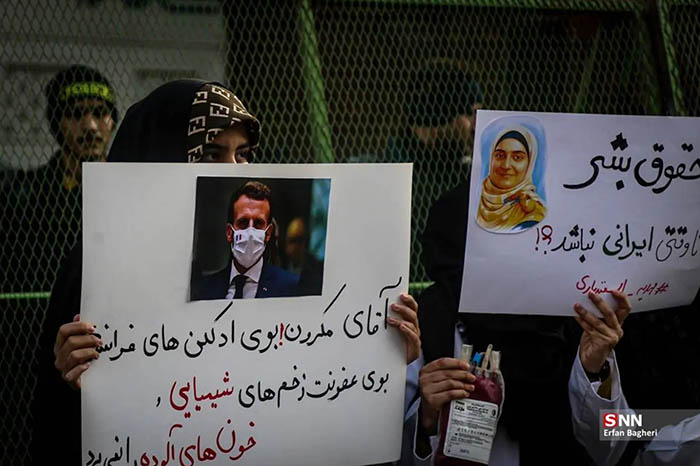
The embers from the flag’s flames filled the air, adding to the sense of chaos and intensity that permeated the protest. It was clear that this was not just a simple demonstration; for the protesters, it was a direct challenge to what they saw as an insult to their country’s dignity and to their sacred beliefs.
Adding fuel to the fire, the commander-in-chief of the Revolutionary Guards, a powerful military and ideological institution in the country, took to the media to threaten the workers of Charlie Hebdo. The general’s words echoed a chilling reminder of the fate of Salman Rushdie, the renowned author who was attacked after the publication of his controversial book, The Satanic Verses, which many Muslims had deemed blasphemous. The general warned that similar consequences could befall those behind the controversial cartoons, sending a clear message that such acts of provocation would not go unchallenged.
The threats and anger on display at the embassy were part of a broader narrative that has unfolded over the years, in which cartoons, artworks, and other forms of satire have become a lightning rod for political and religious tensions. For some, such artistic expressions are seen as a violation of sacred values and a deliberate attack on their way of life. For others, they represent an essential freedom of expression, a cornerstone of democratic societies that should not be stifled, regardless of how controversial or offensive the content might be.