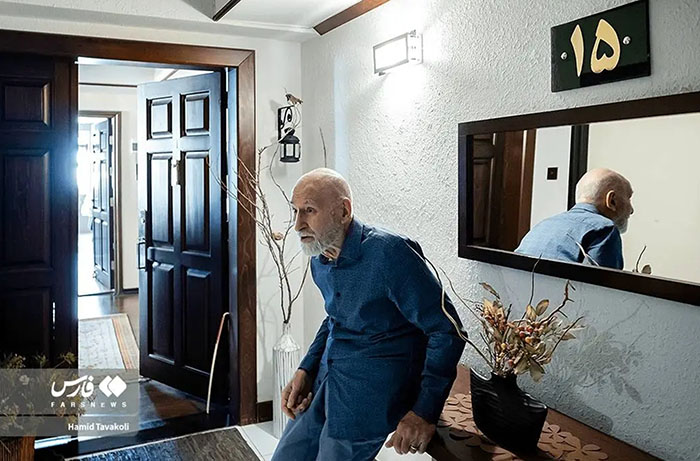
During his time in prison, Nabavi experienced significant ideological shifts. Initially a Marxist, he began to explore new ideas and was introduced to the People’s Mojahedin of Iran Organization (MKO). The group, originally Marxist but later shifting towards an eclectic blend of Islamism and leftist thought, would play a key role in shaping his political future. Nabavi, along with other prominent figures, formed an alternative organization named “Ummah Wahidah” after they distanced themselves from the MKO, which had undergone a dramatic ideological shift.
During his imprisonment, Nabavi was in contact with key figures such as Massoud Rajavi, Musa Khiabani, and Mohammad Ali Rajai, all of whom would go on to play significant roles in post-revolutionary politics. Despite his ideological differences with the MKO, Nabavi remained engaged with these former allies. His solitary confinement lasted for over two years, and the harsh conditions of Evin and Qezel Qaleh prisons were a crucible that hardened his resolve. He spent many months confined to a small cell, allowed only brief moments of physical exercise and virtually no contact with the outside world.
After the 1979 Revolution, when the monarchy fell, Nabavi was released from prison, and a new political landscape began to emerge in the country. The revolution led to the formation of numerous political groups, each with its own agenda. Nabavi became an active participant in the formation of the Mojahedin of the Islamic Revolution Organization, a political group that sought to ensure the success of the revolution and stabilize the newly established regime.