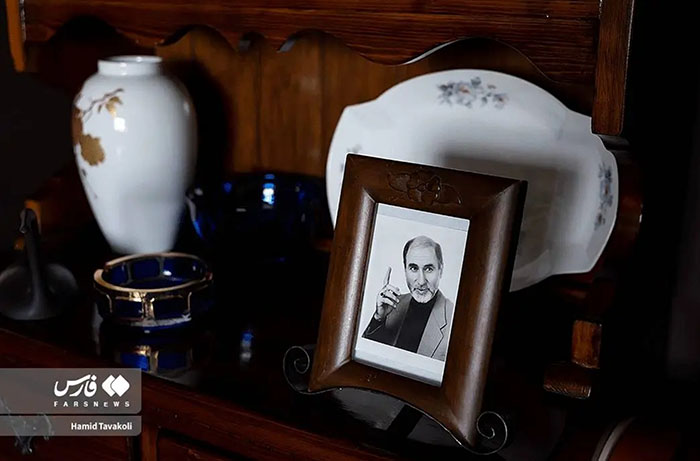
Following the revolution, Nabavi’s political influence continued to grow. He became a central figure in the new government, taking on various roles that reflected his ability to navigate the complex political dynamics of post-revolutionary Iran. In 1979, he was appointed to the Supervisory Council of the Iranian Broadcasting Corporation, a powerful position that allowed him to shape the national narrative during a critical time.
In addition, Nabavi became a key advisor and close ally of Mohammad Ali Rajai, who had been elected Prime Minister in 1979. He served as the Minister of State for Executive Affairs, a role that placed him at the heart of the Iranian government. His responsibilities included managing crucial economic policies and acting as the government’s spokesperson. Nabavi also played an instrumental role in negotiating the release of American hostages, a diplomatic breakthrough that culminated in the Algiers Accords.
Despite his efforts to solidify the revolution, Nabavi’s position in the government was not without challenges. Political factions within the revolution were sharply divided, with the left wing—of which Nabavi was a key figure—opposing the right-wing factions led by figures such as Hossein Rasti Kashani, a representative of Supreme Leader Seyyed Ruhollah Khomeini. These ideological differences created tension within the ranks of the revolutionaries, eventually leading to a split within the Mojahedin of the Islamic Revolution Organization. On January 20, 1982, after a series of confrontations, the left-wing faction, led by Nabavi, broke away from the right-wing faction, which had garnered the support of Khomeini