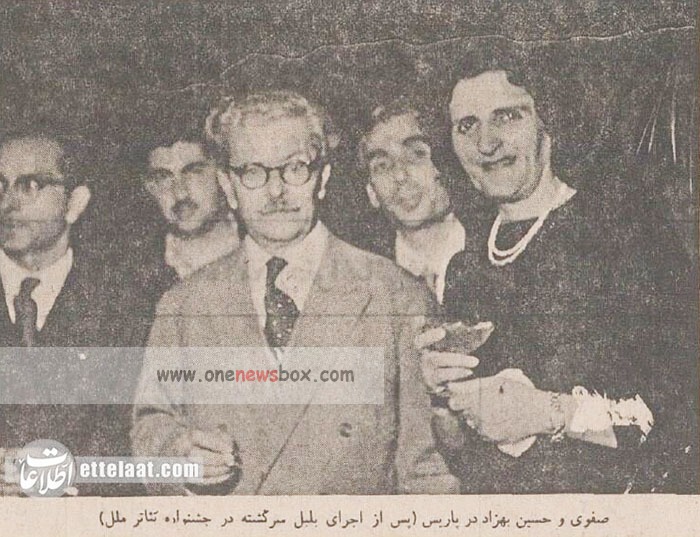
Such behavior illustrates a broader culture among early Iranian theater artists, who often had to assume multiple roles to sustain their institutions. Safavi embodied this culture fully, contributing her time and energy wherever necessary.
Radio and the Workers’ Program
Esmat Safavi’s artistic activities extended beyond theater into radio, which was one of the most influential media of the time. From the very first radio program, she collaborated sincerely with Parviz Khatibi. Radio plays were performed live and without tape, requiring intense concentration, vocal control, and courage. Mistakes could not be corrected, and performances existed only in the moment.
Later, Safavi became involved in weekly performances for the Workers’ Program, a radio initiative aimed at workers and the broader public. Despite holding a relatively important position within the program organization, she faced numerous obstacles in securing leave to participate in these broadcasts. Yet her love for performance drove her to persist.
The producer of the Workers’ Program, Abdullah Atefi, often assisted her by giving her a ride from the program organization to the radio transmitter. This small but telling detail highlights the informal networks of support that sustained artistic production at the time.