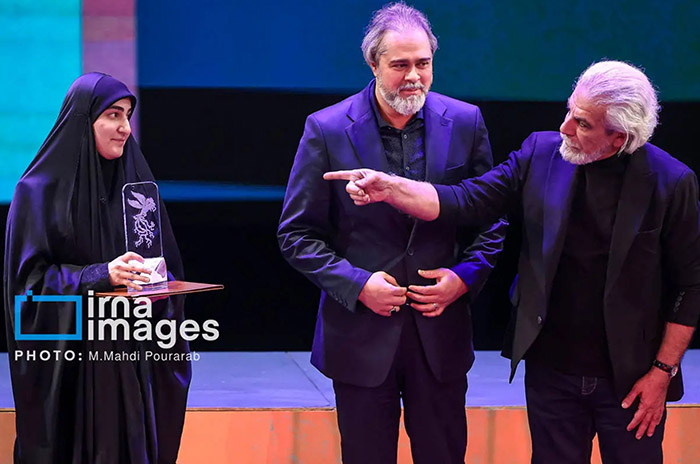
The host then invited Manouchehr Shahsavari, the secretary of the 44th festival, to the stage. Shahsavari had overseen the organization of the event during what many described as one of the most difficult periods in recent cultural history. Shahidifar praised his persistence, noting that despite obstacles and pressures, he had ensured that the festival proceeded without disruption.
Shahsavari began his speech visibly emotional, still affected by the music played earlier. He spoke passionately about love for the homeland, insisting that nothing could diminish that bond. “This land began in the name of truth,” he said, emphasizing cultural continuity and resilience. He warned against allowing despair to take root in people’s hearts, describing hopelessness as a destructive force.
Drawing upon the legacy of great literary and cinematic figures—from classical poets such as Anvari and Rudaki to contemporary masters like Abbas Kiarostami, Asghar Farhadi, and Ebrahim Hatamikia—he argued that art had always embodied hope. According to Shahsavari, these artists served as beacons of light during dark times, offering reflection, beauty, and meaning.