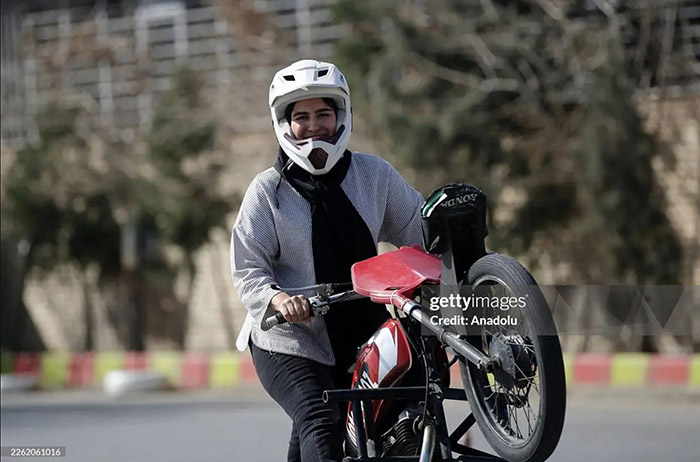
Opponents sometimes cite cultural considerations, suggesting that societal norms should guide policy decisions. Yet even within conservative frameworks, interpretations evolve. The emergence of women in professional fields, higher education, and public service has gradually reshaped expectations. The debate over motorcycle licenses can thus be seen as part of a larger negotiation over gender roles in contemporary society.
Legal scholars examining the issue point out that administrative agencies must act within the boundaries of statutory authority. If regulations do not explicitly prohibit an action, denying access may require additional justification. Mehmandar’s remarks highlighted this tension. He indicated that if there is sufficient institutional will, existing regulations provide a pathway for issuing licenses to women without the need for entirely new legislation.
At the same time, he acknowledged the possibility of establishing specialized training schools to ensure comfort and peace of mind. Such arrangements, he suggested, should not become obstacles. Rather than segregating opportunities, they could serve as transitional measures to accommodate demand while preserving equal access to existing facilities.