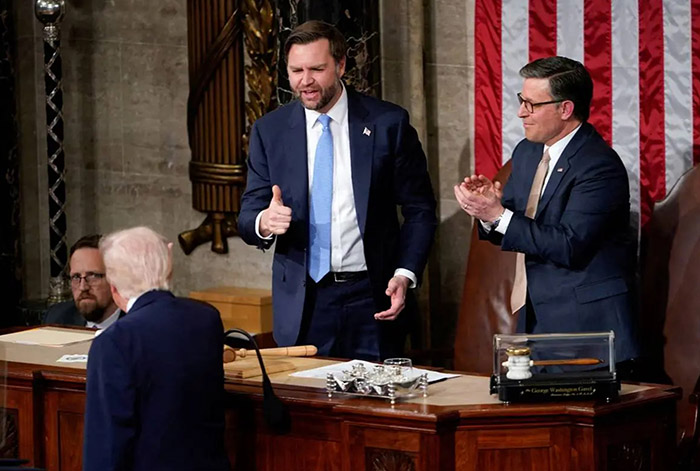
Interestingly, for all its breadth, the speech avoided certain contentious topics. Observers noted the absence of detailed discussion about protests in Minnesota and ongoing scrutiny surrounding the Epstein files. In political communication, omission can be as telling as inclusion. By sidestepping these issues, the president may have sought to maintain focus on themes of strength and success rather than controversy. Yet critics argue that leadership requires confronting uncomfortable subjects directly.
The structure of the speech itself merits attention. Extended addresses serve multiple functions: they allow a president to set the agenda, rally supporters, and dominate the news cycle. Length can be a statement of confidence, signaling that there is much to say and much to defend. However, it also risks fatigue among listeners. Maintaining attention for one hour and 47 minutes requires not only stamina from the speaker but patience from the audience.
Trump’s rhetorical style remains distinctive. He blends formal policy discussion with colloquial flourishes and improvisational asides. Applause lines are delivered with practiced timing, and moments of emphasis are underscored by repetition. The speech oscillated between optimistic proclamations and combative critiques of opponents. This duality—celebration and confrontation—has become a hallmark of his political persona.