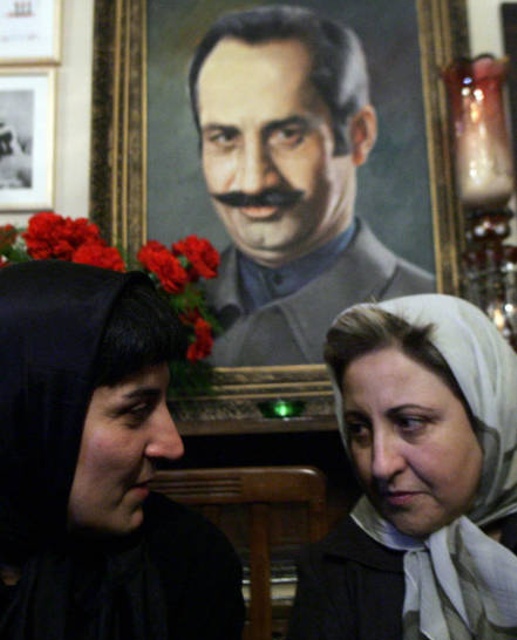
Unlike many of her fellow intellectuals—teachers, scientists, artists—she chose to stay in Iran during a difficult period when anyone suspected of disagreeing with the Islamic state could be arrested, imprisoned, and tortured. Her decision to stay and fight for change while keeping within the bounds of the law earned her the respect of many in her country.
Prevented by government decree, as all Iranian women lawyers were, from practicing law on her own, she joined an all-male law practice during the 1980s and began working on human-rights cases. Under the ayatollah’s repressive government, which enforced its laws by inflicting violence on and withholding basic rights from the people, Ebadi had plenty of battles to fight. During her years as a judge, she had seen numerous cases that illustrated the unfair treatment of women and children.