Strategic Messaging and Regional Influence
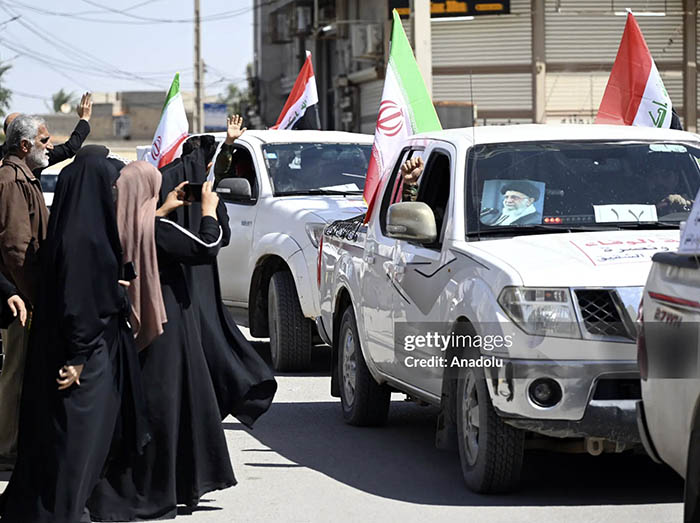
Organizations like Hashd al-Shaabi operate within a complex web of regional influence. Their activities often intersect with broader geopolitical strategies, particularly in relation to Iran’s role in the Middle East. A convoy carrying food aid can therefore be interpreted not only as a humanitarian effort but also as a form of strategic messaging.
Displaying flags, portraits, and coordinated visuals during such missions reinforces identity and alignment. In regions where public perception is closely tied to political legitimacy, these visual elements can have a significant impact. They communicate solidarity, resilience, and readiness without necessarily engaging in direct confrontation.
For Iran, receiving visible support from neighboring العراق can serve as a signal of regional backing, particularly during periods of heightened tension. For Iraq, or at least for factions within it, organizing such support can strengthen internal and external positioning. This dual-layered messaging is a hallmark of Middle Eastern geopolitics, where actions often carry both practical and symbolic meanings.