The Human Element: Stories Inside Tehran’s Night Cafes
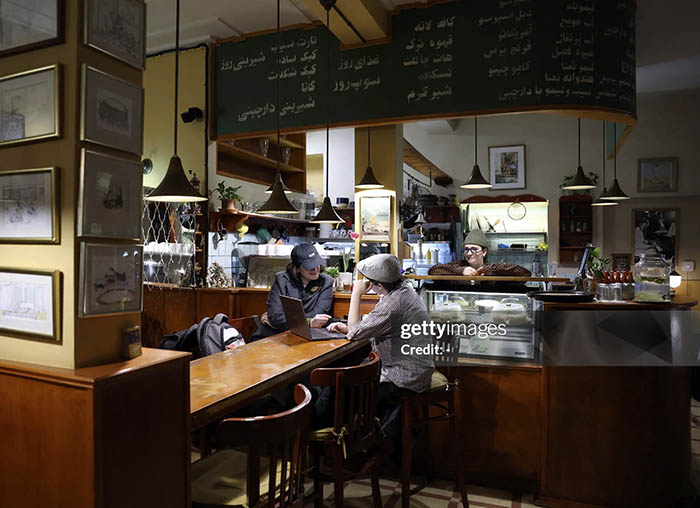
Inside these dimly lit spaces, the human stories are as varied as the patrons themselves. A university student sits in a corner revising notes on a laptop, trying to keep up with classes that have shifted online or been disrupted. Nearby, a group of friends quietly debates recent political developments, occasionally lowering their voices as they glance at their phones for updates.
An elderly man sips tea slowly, watching the younger generation with a mixture of concern and familiarity. For him, the cafe is less about escape and more about observation — a place to witness how the city continues to evolve under pressure. For younger patrons, however, the cafes represent something closer to sanctuary: a place to breathe, to talk freely, and to momentarily disconnect from the intensity of the outside world.
Despite the uncertainty, conversations often drift toward optimism. People share jokes, discuss music, or plan future gatherings as though normal routines will soon return. This quiet optimism coexists with a deeper awareness that circumstances remain unpredictable.
Nighttime Safety and Urban Adjustments
With ongoing regional instability, nighttime routines in Tehran have adapted in subtle ways. Some cafes adjust their closing hours based on local advisories or security considerations. Patrons tend to travel in groups, and streets that once bustled late into the night may now appear calmer and more subdued.
Transportation patterns have also shifted. Ride services and taxis remain active, but people often plan their outings more carefully, choosing cafes that are centrally located or familiar. The sense of community within these spaces extends beyond their walls, as regular patrons look out for one another when leaving late at night.
Lighting and visibility have become important aspects of urban life. Some neighborhoods maintain brighter storefronts and signage to ensure safety, while quieter areas may experience reduced foot traffic after dark. Still, cafes continue to act as anchors of activity in many parts of the city.