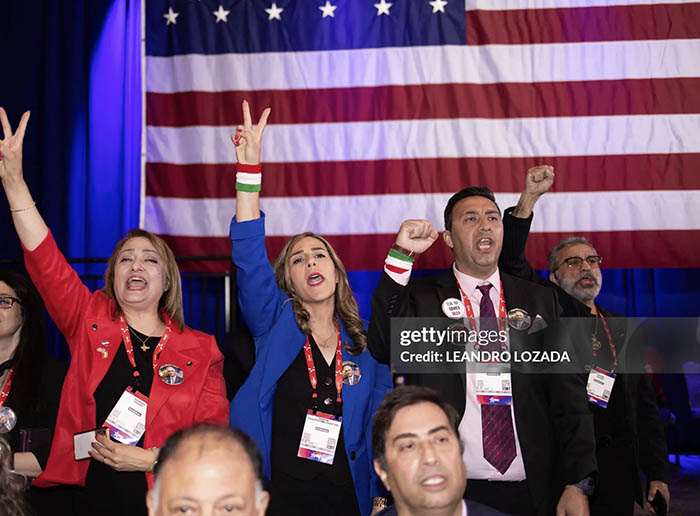
In the end, the significance of Pahlavi’s address lies not only in the specific arguments he made but also in the broader conversation it has sparked. By articulating a vision of a different Iran and challenging the viability of the current system, he has contributed to an ongoing debate that will shape the future of the region and the world. Whether his vision will be realized remains uncertain, but the issues he has raised are likely to remain at the forefront of international discourse for years to come.
The continuation of this debate inevitably leads to deeper questions about legitimacy, leadership, and the mechanisms through which political transformation can realistically occur in Iran. While Reza Pahlavi has articulated a compelling vision of a post-Islamic Republic Iran, the issue of who would guide such a transition remains unresolved and highly contested. Leadership in exile often faces challenges in establishing credibility the country itself, particularly when communication barriers, state censorship, and political fragmentation limit direct engagement with the population.
Pahlavi has attempted to address this concern by framing himself not as a future ruler but as a facilitator of a democratic transition. He has repeatedly emphasized that the Iranian people should determine their own political system through free elections, whether that results in a republic, a constitutional monarchy, or another form of governance. This positioning is designed to broaden his appeal and avoid alienating those who may oppose a return to monarchical structures. However, skepticism persists among various opposition groups, some of which question whether his historical legacy and international alliances may complicate efforts to build a truly inclusive movement.
The question of unity among opposition forces is one of the most critical factors in determining the feasibility of systemic change. Iran’s landscape includes secular democrats, reformists, monarchists, ethnic minority groups, labor activists, and others, each with distinct priorities and visions for the future. Without a cohesive framework that can accommodate these diverse perspectives, efforts to challenge the current may struggle to gain sufficient momentum. Pahlavi’s speech implicitly called for such unity, urging Iranians across ideological divides to focus on shared goals such as freedom, justice, and national sovereignty.
At the same time, the internal dynamics within Iran continue to evolve. Economic pressures, exacerbated by sanctions and domestic mismanagement, have contributed to widespread dissatisfaction. Inflation, unemployment, and declining purchasing power have affected large segments of the population, creating conditions that can fuel unrest. In recent years, protests have emerged in response to a variety of grievances, ranging from economic hardship to social restrictions. While these movements have demonstrated the of significant discontent, they have also revealed the challenges of sustaining momentum and achieving coordinated action in the face of state repression.