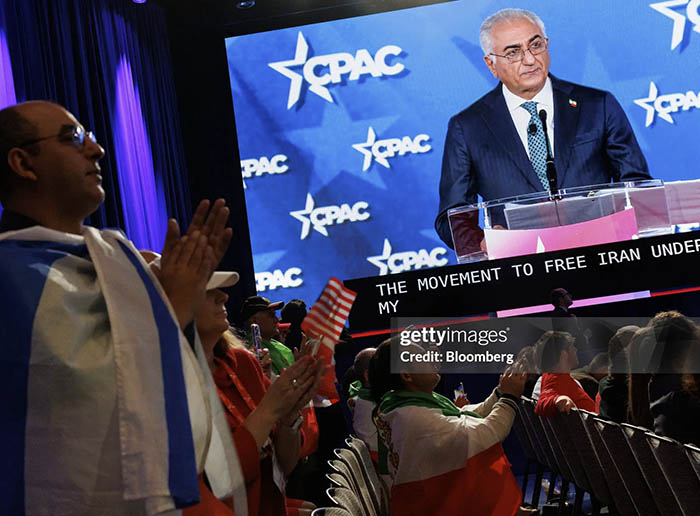
The implications of such a transformation would be profound. Iran is a key player in the Middle East, with influence extending across multiple countries and conflicts. Its relationships with various political and military groups have shaped the balance of power in the region for decades. Pahlavi argued that a post-Islamic Republic Iran would fundamentally alter these dynamics, reducing tensions and fostering cooperation rather than confrontation. He suggested that many of the conflicts that currently define the region could be de-escalated or resolved if Iran were governed by a system that prioritizes national interest and international norms over ideological expansion.
At the same time, Pahlavi’s vision includes significant economic reforms. Iran possesses vast natural resources, a highly educated population, and a strategic geographic position that could make it a major economic power. However, sanctions, corruption, and state control have hindered its development. In a reimagined Iran, Pahlavi envisions an open economy that attracts foreign investment, encourages entrepreneurship, and integrates into global markets. Such changes, he argued, would not only improve living standards for Iranians but also contribute to global economic stability.
Despite the clarity of his message, the path to achieving this vision remains deeply uncertain. The Islamic Republic maintains significant control over political institutions, security forces, and economic resources. Any attempt to dismantle or replace it would face formidable resistance. Moreover, the opposition to the regime is not monolithic. It includes a wide range of groups with differing ideologies, goals, and strategies. Building a unified movement capable of effecting change is one of the greatest challenges facing those who share Pahlavi’s objectives.
International factors also play a critical role. While some policymakers and political groups may sympathize with Pahlavi’s position, there is widespread caution about the risks associated with regime change. Historical examples from other countries demonstrate that the collapse of an established system can lead to instability, conflict, and unintended consequences. This concern is particularly acute in a region as complex and volatile as the Middle East.