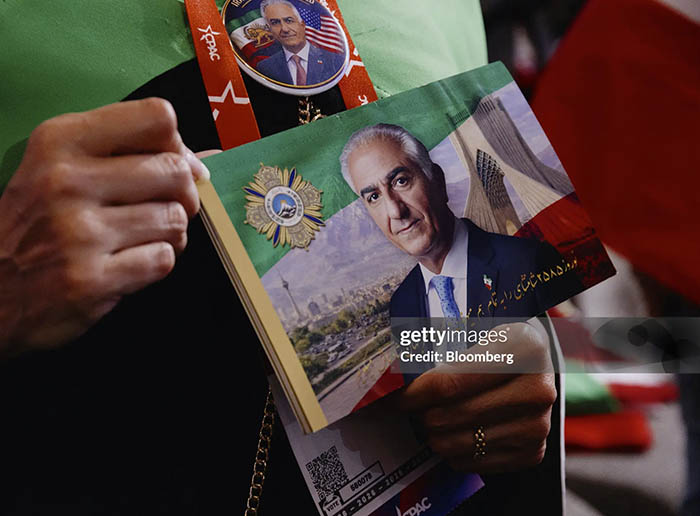
At CPAC, his message was clear and uncompromising. He argued that decades of attempts to reform the Islamic Republic from within have failed, and that the system’s foundational structure—rooted in clerical authority and ideological control—prevents meaningful change. According to Pahlavi, any effort to preserve elements of the current regime would only perpetuate instability and conflict. He warned that the survival of even parts of the system would continue to pose threats not only to the Iranian people but also to regional and global security.
This assertion directly challenges long-standing international approaches that have sought to engage Iran through diplomacy, negotiation, and incremental reform. Agreements such as the Joint Comprehensive Plan of Action were built on the premise that engagement could moderate Iran’s behavior and integrate it more fully into the international community. Pahlavi’s argument rejects that premise entirely, insisting instead that the nature of the regime itself makes such outcomes impossible.
Central to his speech was a vision of what he described as “Iran after the Islamic Republic.” This vision emphasizes a secular political system in which religion is separated from the state, ensuring that governance is based on democratic principles rather than religious doctrine. He spoke of a future in which free and fair elections allow the Iranian people to determine their leadership, where the rule of law is upheld, and where individual freedoms are protected. In this imagined future, Iran would rejoin the global community as a constructive and cooperative actor, contributing to regional stability rather than fueling conflict.