The unfolding war between the United States, Israel, and Iran in 2026 marks one of the most consequential geopolitical crises in modern history. What began as a series of coordinated military strikes has evolved into a sustained and complex conflict with far-reaching implications for global security, economic stability, and international diplomacy. As the situation intensifies, the world is witnessing a dangerous convergence of military power, regional rivalries, and strategic interests centered in one of the most volatile regions on Earth.
The origins of this war can be traced back to decades of tension between Iran and Israel, compounded by the United States’ long-standing opposition to Iran’s nuclear ambitions and regional influence. Diplomatic efforts to contain Iran’s nuclear program had faltered in the years leading up to 2026, with negotiations collapsing amid mutual distrust and accusations of non-compliance. Against this backdrop, intelligence reports suggesting imminent threats prompted decisive military action. On February 28, 2026, the United States and Israel launched a coordinated offensive targeting key Iranian military and strategic sites, signaling the beginning of a direct and unprecedented confrontation.
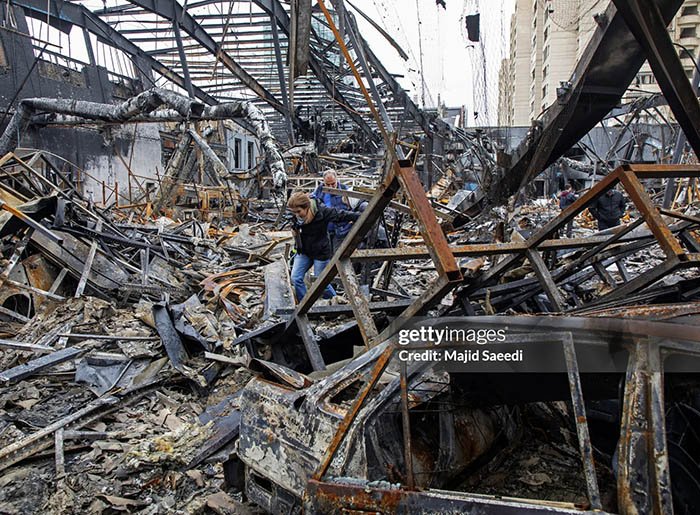
The initial strikes were characterized by precision and scale, aimed at crippling Iran’s military infrastructure and command capabilities. Strategic installations, missile bases, and suspected nuclear facilities were among the primary targets. The attacks extended into major urban areas, including Tehran, where industrial zones and infrastructure suffered significant damage. Images emerging from the capital depict widespread destruction, with collapsed buildings, damaged workshops, and emergency responders navigating through debris. The visual evidence underscores the human cost of the conflict, as civilian areas have increasingly become entangled in the theater of war.