The Visual Language of Protest in Tehran
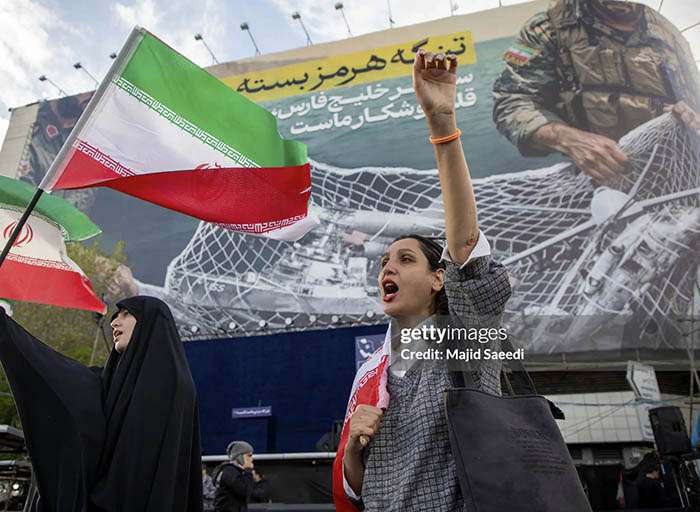
What unfolded in Tehran on April 5, 2026, was not only a political event but also a carefully layered visual narrative. The images emerging from Enqelab Square carried a symbolic weight that extended far beyond the streets themselves. Every flag raised, every tractor driven through the city, and every crowd formation contributed to a broader story—one that blends national identity, regional alliances, and geopolitical messaging.
The presence of multiple flags—particularly those of Iraq and Afghanistan—added a dimension that transformed the demonstrations from purely domestic expressions into something more layered. It suggested that the tensions involving Iran were not isolated but part of a wider regional consciousness shaped by decades of conflict, intervention, and shifting alliances.
The Meaning Behind Multinational Flags in a National Protest
When people carry foreign flags during a domestic rally, the message is rarely simple. In Tehran, the appearance of Iraqi and Afghan flags created a narrative of shared experience. These countries, each shaped by long histories of war and foreign involvement, carry symbolic weight that resonates with segments of Iranian society.
The Iraqi flag, once associated with conflict during the Iran-Iraq War, now represents a transformed relationship. Over the years, political and economic ties between Iran and Iraq have deepened, creating a new layer of cooperation. Seeing that flag in Tehran today reflects not just diplomacy but a reframing of history—from adversaries to partners navigating a turbulent region.
The Afghan flag carries a different, but equally powerful, resonance. Afghanistan’s decades of instability and foreign military presence have made it a symbol of endurance and resistance in the broader Middle Eastern and Central Asian context. Its presence in Tehran suggests a narrative of shared struggle rather than formal alliance, a kind of symbolic alignment that operates more on emotion and perception than official policy.
Together, these flags create a visual argument: that Iran’s current situation is part of a larger regional pattern rather than an isolated crisis.