Introduction
On the 41st night following the assassination of Iran’s long-standing supreme authority, the country stood at a historic crossroads. Streets once filled with mourning had begun to pulse with a different energy—uncertain, tense, but undeniably transformative. Across cities and provinces, whispers of change evolved into visible displays of allegiance.
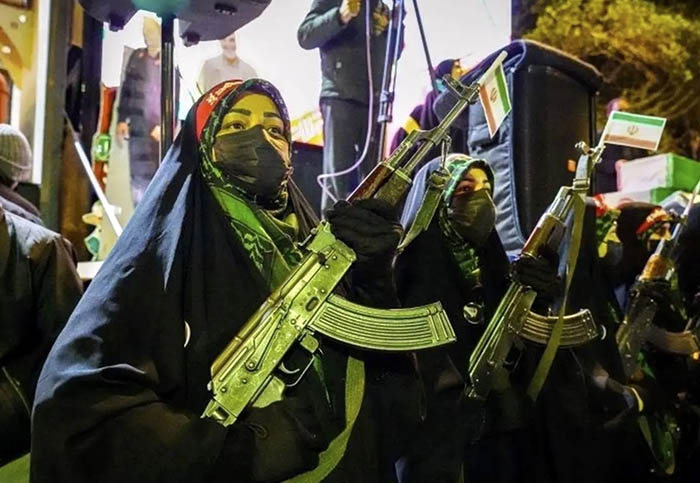
In the northeastern city of Bojnourd, a dramatic and symbolic moment unfolded: armed commandos carrying Kalashnikov rifles marched through the streets, publicly pledging loyalty to a newly emerging leader—a woman whose rise signaled a profound shift in Iran’s political and cultural trajectory.
This moment, captured and circulated widely across digital platforms, marked what many observers began calling “The 41st Night Transition”—a pivotal phase in Iran’s post-assassination power restructuring.