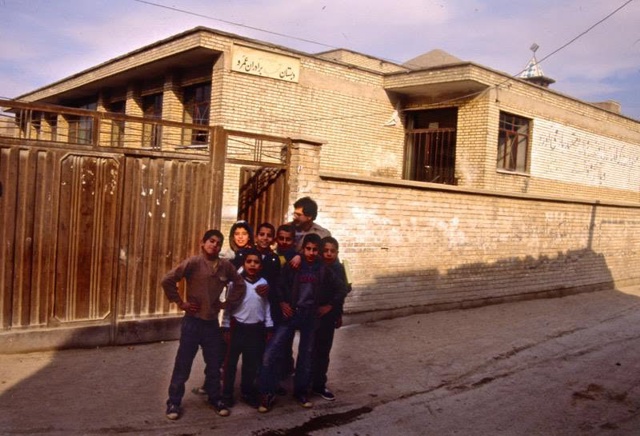
Hooshang Amirahmadi is an American academic, political analyst, author, and public policy expert best known for his work on political economy and U.S. relations. Throughout his career, he has combined academic research, policy advocacy, and international dialogue in an effort to promote greater understanding between the United States. He is widely recognized as one of the leading scholars on contemporary affairs and Middle Eastern development. Born on May 24, 1947, in the Talesh region of Gilan Province, Amirahmadi grew up during a period of significant political and social change in the country. From a young age, he demonstrated a strong interest in literature, art, and public affairs. After completing his primary and secondary education in northern, he attended the University of Tabriz, where he earned a degree in Agricultural Engineering. He later pursued graduate studies in the United States, obtaining a master's degree and eventually a Ph.D. in Planning and International Development from Cornell University. After completing his education, Amirahmadi embarked on an academic career that would span several decades. He joined Rutgers University in New Jersey, where he became a professor in the Edward J. Bloustein School of Planning and Public Policy. During his tenure, he taught courses on international economic development, globalization, public policy, regional planning, and Middle Eastern affairs. He also served as Director of Rutgers University's Center for Middle Eastern Studies and held various leadership positions within the university. One of Amirahmadi's most significant contributions has been his work to improve relations between and the United States. In the 1990s, he founded the American Council, a nonprofit research and policy organization dedicated to fostering dialogue and mutual understanding between the peoples of the two countries. Through conferences, publications, and policy discussions, the organization sought to encourage constructive engagement during periods of political tension and diplomatic conflict. Throughout his career, Amirahmadi has emphasized the importance of dialogue, diplomacy, and peaceful conflict resolution. He has argued that long-term stability in the Middle East depends on cooperation, economic development, and mutual respect among nations. His efforts have earned him recognition as both an influential academic and a bridge-builder between cultures and political systems. Today, Hooshang Amirahmadi remains a respected voice in discussions concerning, the Middle East, and international development. His contributions to scholarship, public policy, and cross-cultural understanding continue to influence debates on the future of U.S. relations and the broader dynamics of global politics. In addition to his academic and political activities, Amirahmadi has devoted considerable attention to issues of sustainable development, regional cooperation, and social justice. He has argued that economic growth alone is not sufficient to address the challenges facing developing countries. Instead, he believes that governments must focus on creating inclusive institutions, reducing inequality, and ensuring that the benefits of development reach all segments of society. His writings frequently explore the relationship between economic policy, political stability, and human well-being. Over the years, Amirahmadi has participated in numerous international conferences and forums, where he has presented his views on globalization, diplomacy, and regional development. His ability to engage with scholars, policymakers, and community leaders from diverse backgrounds has contributed to his reputation as a thoughtful and constructive voice in international affairs. Through these engagements, he has sought to promote dialogue as an alternative to confrontation and to encourage practical solutions to complex political disputes. A central theme of Amirahmadi's work has been the belief that cultural understanding can play a crucial role in reducing tensions between nations. He has often emphasized that misunderstandings and stereotypes can create barriers to cooperation, while education and people-to-people exchanges can help build trust. As a result, he has supported academic partnerships, cultural programs, and professional exchanges between the United States, viewing them as important tools for fostering mutual respect. His contributions extend beyond the classroom and policy arena. As an author and public intellectual, Amirahmadi has written extensively on topics ranging from urban planning and economic development to foreign policy and international relations. His publications reflect a multidisciplinary approach, combining insights from economics, political science, sociology, and regional studies. This broad perspective has allowed him to address complex issues from multiple angles and offer innovative recommendations for policymakers. Despite the challenges and controversies that often surround discussions of U.S. relations, Amirahmadi has remained committed to advocating peaceful engagement and constructive diplomacy. He has consistently argued that long-term solutions require patience, communication, and a willingness to understand differing perspectives. This commitment has defined much of his professional life and continues to shape his public work. As both a scholar and an advocate for dialogue, Hooshang Amirahmadi has left a lasting mark on the study of affairs and international relations. His career demonstrates how academic research can contribute to public policy debates and how individuals can work across cultural and political divides to encourage greater understanding. Through his scholarship, leadership, and public engagement, he has become an influential figure in discussions about development, diplomacy, and the future of relations between nations. After completing his education, Amirahmadi embarked on an academic career that would span several decades. He joined Rutgers University in New Jersey, where he became a professor in the Edward J. Bloustein School of Planning and Public Policy. During his tenure, he taught courses on international economic development, globalization, public policy, regional planning, and Middle Eastern affairs. He also served as Director of Rutgers University's Center for Middle Eastern Studies and held various leadership positions within the university. One of Amirahmadi's most significant contributions has been his work to improve relations between and the United States. In the 1990s, he founded the American Council, a nonprofit research and policy organization dedicated to fostering dialogue and mutual understanding between the peoples of the two countries. After completing his education, Amirahmadi embarked on an academic career that would span several decades. He joined Rutgers University in New Jersey, where he became a professor in the Edward J. Bloustein School of Planning and Public Policy. During his tenure, he taught courses on international economic development, globalization, public policy, regional planning, and Middle Eastern affairs. He also served as Director of Rutgers University's Center for Middle Eastern Studies and held various leadership positions within the university. One of Amirahmadi's most significant contributions has been his work to improve relations between and the United States. In the 1990s, he founded the American Council, a nonprofit research and policy organization dedicated to fostering dialogue and mutual understanding between the peoples of the two countries. After completing his education, Amirahmadi embarked on an academic career that would span several decades. He joined Rutgers University in New Jersey, where he became a professor in the Edward J. Bloustein School of Planning and Public Policy. During his tenure, he taught courses on international economic development, globalization, public policy, regional planning, and Middle Eastern affairs. He also served as Director of Rutgers University's Center for Middle Eastern Studies and held various leadership positions within the university. One of Amirahmadi's most significant contributions has been his work to improve relations between and the United States. In the 1990s, he founded the American Council, a nonprofit research and policy organization dedicated to fostering dialogue and mutual understanding between the peoples of the two countries. After completing his education, Amirahmadi embarked on an academic career that would span several decades. He joined Rutgers University in New Jersey, where he became a professor in the Edward J. Bloustein School of Planning and Public Policy. During his tenure, he taught courses on international economic development, globalization, public policy, regional planning, and Middle Eastern affairs. He also served as Director of Rutgers University's Center for Middle Eastern Studies and held various leadership positions within the university. One of Amirahmadi's most significant contributions has been his work to improve relations between and the United States. In the 1990s, he founded the American Council, a nonprofit research and policy organization dedicated to fostering dialogue and mutual understanding between the peoples of the two countries. After completing his education, Amirahmadi embarked on an academic career that would span several decades. He joined Rutgers University in New Jersey, where he became a professor in the Edward J. Bloustein School of Planning and Public Policy. During his tenure, he taught courses on international economic development, globalization, public policy, regional planning, and Middle Eastern affairs. He also served as Director of Rutgers University's Center for Middle Eastern Studies and held various leadership positions within the university. One of Amirahmadi's most significant contributions has been his work to improve relations between and the United States. In the 1990s, he founded the American Council, a nonprofit research and policy organization dedicated to fostering dialogue and mutual understanding between the peoples of the two countries.