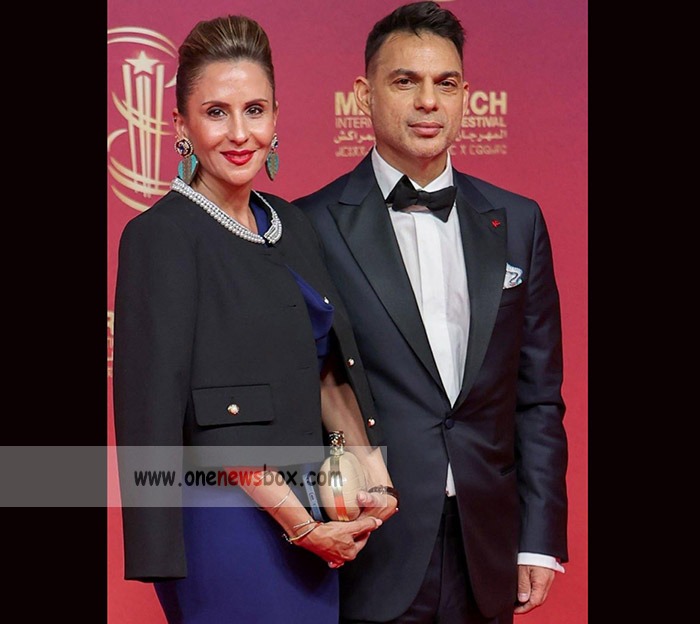
Peyman Maadi and his wife at the Morocco Film Festival

Mohammad Peyman Maadi stands among the most influential Iranian actors of his generation—an artist whose career bridges Iranian social realism and international cinema. Born on July 20, 1960, in New York City, Maadi’s life story reflects a rare fusion of Iranian cultural roots and Western upbringing. Over more than three decades, he has evolved from a screenwriter working behind the scenes to one of the most recognizable faces of contemporary Iranian and international film. His journey embodies persistence, artistic risk-taking, and a deep engagement with human psychology and social conflict.

Early Life: A Childhood Between Two Worlds

Peyman Maadi was born in New York City while his father was pursuing higher education at Columbia University. Along with his older brother, Maadi spent his earliest years in the United States before returning to Iran at the age of six. This early exposure to two very different societies—one Western and one deeply rooted in Persian culture—would later influence his worldview and artistic sensibilities.

Growing up in post-revolutionary Iran during the turbulent years following 1979, Maadi experienced firsthand the social and political transformations that reshaped Iranian society. Unlike many artists who enter cinema through theatrical or artistic education, Maadi initially followed a technical path. He studied metallurgical engineering at Islamic Azad University, Karaj Branch and graduated with a degree far removed from the world of cinema.

Yet even during his engineering studies, Maadi was drawn irresistibly toward storytelling. This quiet tension between technical discipline and creative ambition defined his early adulthood and ultimately fueled his turn toward screenwriting.

Maadi’s first professional step into Iranian cinema was not in front of the camera, but behind it. He began his career as a screenwriter in the 1990s, a period when Iranian cinema was gaining unprecedented international attention following the rise of auteurs such as Abbas Kiarostami and Mohsen Makhmalbaf. His earliest credited screenplay, The Swan’s Voice, marked the beginning of a decade-long journey in which Maadi honed his ability to craft character-driven stories.

Throughout the 2000s, he wrote screenplays for films such as Atash, Cafe Setareh, and Coma, earning respect among filmmakers for his nuanced dialogue and realistic character arcs. These early works demonstrated his growing fascination with moral ambiguity, emotional restraint, and social tension—elements that would later define the films in which he starred.

What separated Maadi from many other screenwriters of the time was his detailed understanding of ordinary people navigating extraordinary pressures. His characters were neither heroes nor villains, but deeply human individuals shaped by circumstance.


Breakthrough as an Actor: Collaboration with Asghar Farhadi

Maadi’s transition from screenwriter to actor came unexpectedly yet decisively. His acting debut occurred in 2008 in About Elly, directed by Asghar Farhadi. The film, which would later become one of the defining works of modern Iranian cinema, showcased Maadi in a powerful ensemble cast. His restrained, introspective performance immediately drew attention from critics.

However, it was his role in A Separation that transformed him into an international star. His portrayal of Nader—a conflicted middle-class Iranian man entangled in a devastating legal and moral struggle—earned him the Silver Bear for Best Actor at the Berlin International Film Festival. The award was not only a personal triumph for Maadi but also a historic moment for Iranian cinema.

The film’s critical and commercial success across the globe brought Maadi unprecedented visibility. More importantly, his performance redefined Iranian screen masculinity: controlled, emotionally layered, and morally complex. Unlike the traditional heroic archetypes of earlier Iranian cinema, Maadi’s Nader was flawed, stubborn, caring, and fragile all at once.


International Expansion: From Sundance to Hollywood

Following the global success of A Separation, Maadi received offers from international filmmakers seeking to cast an authentic Middle Eastern presence in complex narratives. His first major international lead role came in Camp X-Ray, where he starred opposite Kristen Stewart. The film premiered at the Sundance Film Festival and was praised for its sensitive portrayal of human connection within the dehumanizing environment of Guantanamo Bay.

Maadi’s performance as Ali, a detainee with intelligence, dignity, and inner conflict, once again drew attention for its emotional subtlety. Rather than leaning on political rhetoric, he presented a deeply personal portrait of isolation, resilience, and quiet resistance.

His next major international appearance came in Last Knights, where he shared the screen with Morgan Freeman and Clive Owen. Soon after, he appeared in Six Underground, directed by Michael Bay and starring Ryan Reynolds. These projects marked Maadi’s successful transition into big-budget international cinema without sacrificing the depth of his earlier performances.

He later made appearances in Western television as well, including a cameo in HBO’s Westworld, a critically acclaimed science fiction series known for its philosophical complexity.


Return to Iranian Grit: Collaboration with Saeed Roustaei

Despite growing success abroad, Maadi never distanced himself from Iranian socially conscious cinema. One of the most important artistic chapters of his career began with his collaboration with director Saeed Roustaei. Together, they created some of the most intense crime and social dramas in modern Iranian film.

In Eternity and a Day, Maadi delivered a harrowing performance as a struggling father entangled in addiction and poverty. The film’s raw realism shocked audiences and critics alike, earning him multiple award nominations, including a nomination for Best Actor at the Fajr Film Festival and a win at the Cinema House Festival.

Check Also

Naser Masoudi in the picture frame

The death of Nasser Masoudi, the oldest surviving singer of Gilaki poetry and one of …

Leave a Reply

Your email address will not be published. Required fields are marked *