In the mid-1950s, Iran stood at a complex crossroads of modernization and deprivation. While the Pahlavi state promoted images of progress, urban development, and medical advancement—particularly in Tehran—the realities of everyday life for large segments of the population remained deeply marked by poverty, inequality, and institutional fragmentation. One of the starkest illustrations of this contradiction can be found in the realm of healthcare, especially in the procurement of blood and blood products prior to the establishment of the Iranian Blood Transfusion Organization.
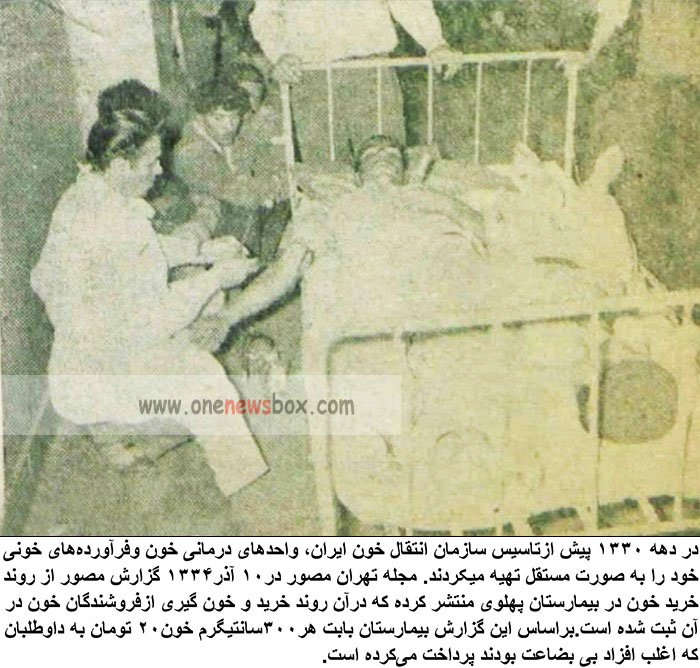
On December 1, 1955, Tehran Muswar magazine published an illustrated investigative report documenting the process of blood purchasing at Pahlavi Hospital, one of Tehran’s most prominent modern medical institutions at the time. The report described how hospitals independently sourced blood by purchasing it directly from individuals—mostly among the urban poor—who sold their blood in exchange for a small sum of money. According to the report, the hospital paid 20 tomans for every 300 cubic centimeters of blood, a transaction that reveals much about medical practices, social inequality, and ethical blind spots in Iran during that era.