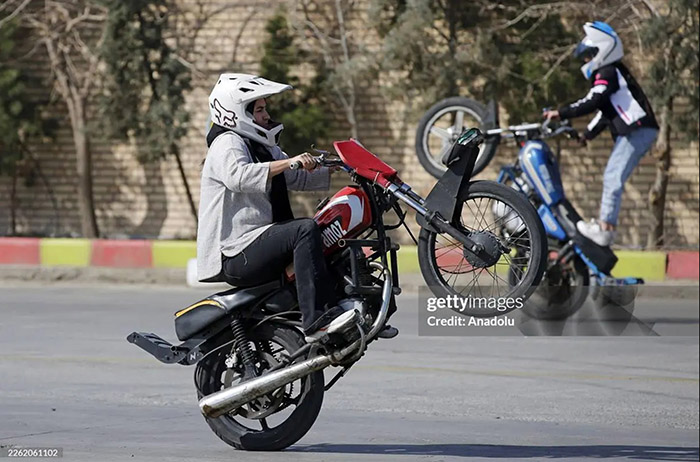
In recent years, images circulated widely on social media showing groups of women participating in motorcycle training courses at a specialized center in the southern districts of the capital. Wearing helmets and protective gear, they practiced balance, coordination, braking techniques, and even advanced maneuvers. Some of the published photographs captured moments of remarkable confidence: women riding in formation, performing tight turns, and in a few cases attempting stunt exercises such as controlled wheel lifts or even unicycling displays that demonstrated both skill and determination. These scenes quickly became symbolic of a broader social conversation about access, equality, and public rights.
For many observers, the images represented more than a training session. They reflected a growing interest among women in mobility, independence, and participation in activities traditionally dominated by men. Motorcycling, long perceived as a male-oriented pursuit, requires physical coordination, alertness, and technical understanding. The women in these classes were not merely experimenting; they were undergoing structured instruction under professional supervision. Instructors guided them through theoretical lessons on traffic regulations, safety standards, and mechanical basics before allowing them onto the practice grounds.