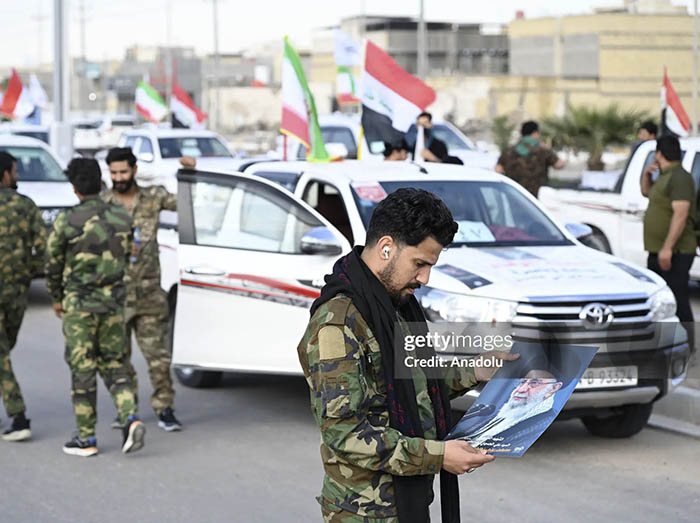
The emergence of reports describing a large-scale convoy organized by Hashd al-Shaabi traveling from Basra to Iran has sparked widespread attention across global media, social platforms, and geopolitical observers. According to circulating narratives, the convoy—consisting of approximately 100 vehicles—was dispatched as part of a humanitarian aid initiative aimed at supporting Iranian regions reportedly affected by escalating tensions involving United States and Israel. While the details of these claims remain subject to verification, the story itself reflects the complex intersection of humanitarian action, regional alliances, and information warfare in the modern Middle East.
Future Developments
As the situation in the Middle East continues to evolve, similar narratives are likely to emerge. Convoys, aid missions, and symbolic actions will remain part of the regional landscape, reflecting both humanitarian needs and geopolitical realities.
Monitoring these developments requires a combination of skepticism and openness. Not every claim will be accurate, but each one may contain elements of truth that contribute to a broader picture. By staying informed and critically engaged, observers can navigate the complexities of Middle East news more effectively.
The reported convoy of 100 vehicles organized by Hashd al-Shaabi from Basra to Iran during a time of alleged war captures many of the defining characteristics of modern information flow: emotion, and complexity. It brings together themes of humanitarian aid, regional alliances, media influence, and geopolitical tension.
While the full details of the convoy and the context surrounding it remain subject to verification, the discussion itself offers valuable insights into how narratives are constructed and understood. In a world where information is both abundant and contested, the ability to analyze, question, and contextualize is more important than ever.
The reported convoy itself, allegedly composed of trucks carrying essential food supplies, symbolizes more than just logistical support. It reflects the mobilization capacity of Hashd al-Shaabi, also known as the Popular Mobilization Forces, a coalition of paramilitary groups that became prominent during the fight against extremist organizations in Iraq. Over time, Hashd al-Shaabi has evolved into a significant political and military actor within Iraq, with influence extending into regional affairs. Its involvement in cross-border initiatives, whether humanitarian or strategic, often draws attention due to its perceived alignment with Iranian interests.