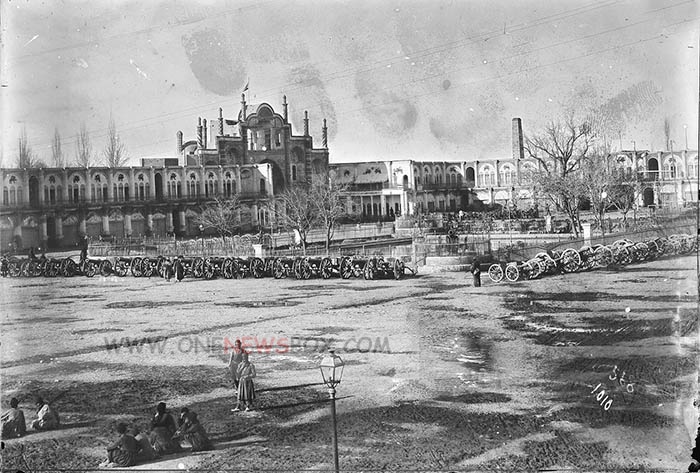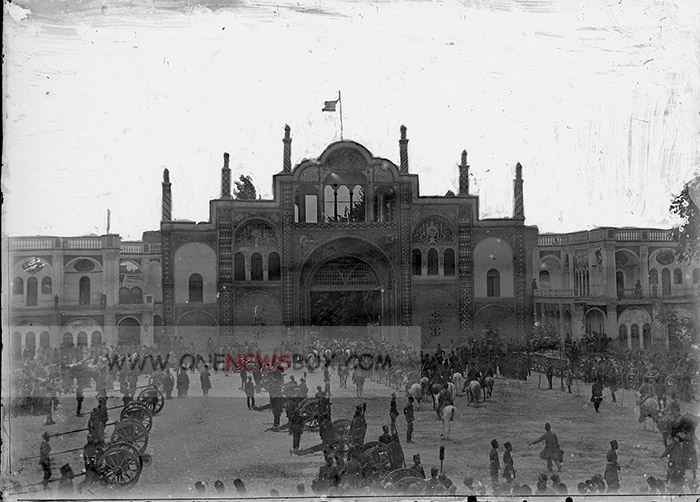
Taking 10 years to be completed, the construction of this square was contemporaneous with the first urban developments of capital in late 18th. Originally, the square was surrounded from the north, south, and west by two rows of arcades. Some believe that the original design of the square has been inspired by that of Naqsh-e Jahan Square in Isfahan. Later on, the chambers around the square gave their place to constructions which in turn were destroyed, or replaced by other buildings in the following periods. By the end of the Qajar era, the old layout of the square was changed (1921 to 1940).
These changes can be said to have happened in line with the globally spread modernization as a result of which the ‘square,’ as an urban entity, was losing its previous functions and identity.There used to be six gateways in the north, south, west, and east of the square joining the square to the main streets of capital. The same streets still find their way to the square but the gates are no more existent. On the eastern flank, originally the location of Royal Bank, you see the old building of Bank-e Tejarat which has been recorded as a national heritage.