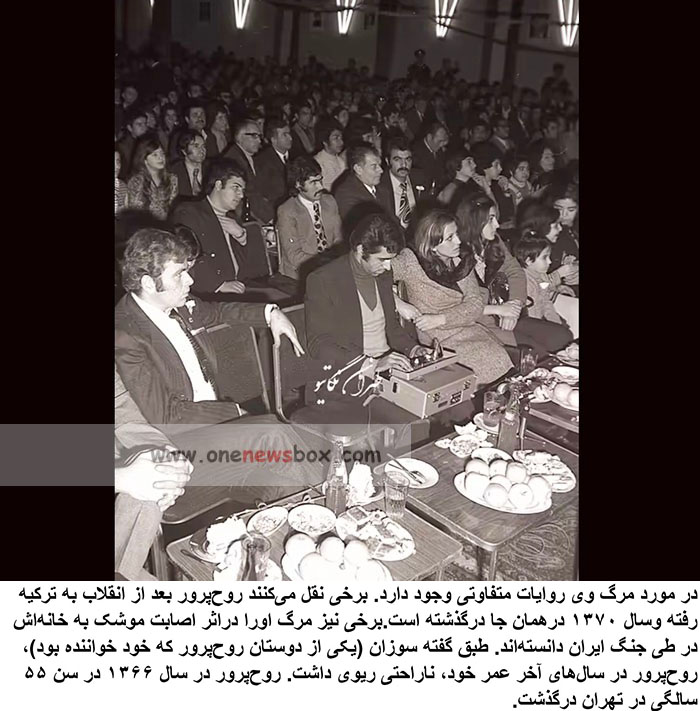
Rouhparvar became a performer in this lively environment. Her transition from radio to the Lalehzar entertainment scene was significant because it allowed her to combine the familiarity of a broadcast voice with the direct impact of live performance. A singer performing on stage needed not only a good voice but also confidence, presence, and the ability to hold the attention of an audience. Rouhparvar became known for possessing these qualities.
The most distinctive feature of her artistry was reportedly the sheer power of her voice. Her vocal delivery was strong, dramatic, and emotionally forceful. This characteristic eventually led to her being compared with Umm Kulthum, the legendary Egyptian singer whose extraordinary vocal ability had made her an icon throughout the Middle East and the wider Arab world. Rouhparvar’s nickname, “the Umm Kulthum of Iran,” therefore represented more than a simple compliment. It indicated the impression that her vocal power made on audiences and fellow performers.
Umm Kulthum was known for her ability to communicate emotion through an exceptionally commanding voice, and the comparison suggests that Rouhparvar possessed a similarly striking vocal presence. Such a nickname also reveals something about the cultural environment in which Iranian popular music developed. Iranian audiences were familiar with music from across the Middle East, and artists from countries such as Egypt had considerable influence on regional musical tastes. Comparing an Iranian singer to Umm Kulthum was therefore a way of placing Rouhparvar within a broader Middle Eastern musical tradition while also emphasizing the distinctive quality of her own voice.