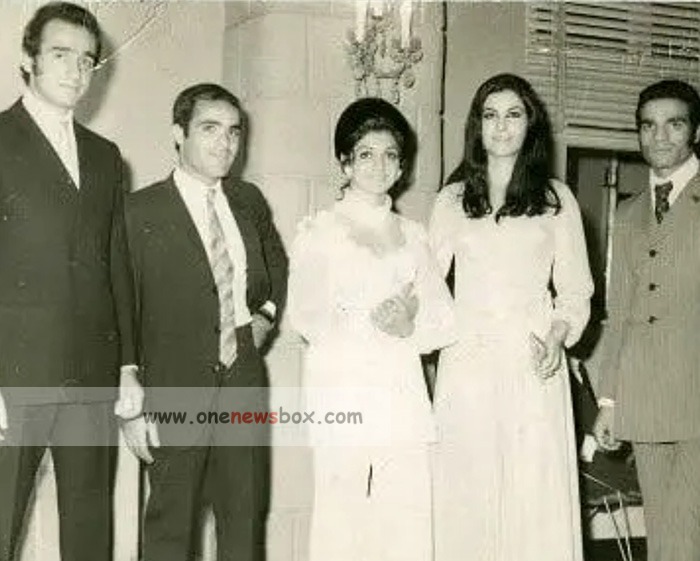
One of the most remarkable stories from Sezavar’s early career concerns an encounter with Vigen, one of the most influential singers in the history of modern Iranian popular music.
Vigen was widely recognized for introducing new approaches to performance and helping popularize guitar-based music among Iranian audiences. His musical style combined romantic melodies with contemporary influences, contributing to the development of a modern Iranian pop sound.
In 1965, Sezavar was hired to photograph a wedding celebration.
He already knew the bride’s family and had occasionally performed Vigen’s songs at her birthday gatherings. On the wedding night, Vigen himself had been invited to provide musical entertainment.
Recognizing Sezavar’s enthusiasm for singing, the bride asked Vigen whether the young photographer could perform a song for the guests.
According to an account Sezavar later shared on Instagram, Vigen responded with a humorous challenge. He declared that if the photographer sang well, he would accompany him on the guitar. If the performance was poor, however, he jokingly threatened to smash the guitar over the young man’s head and leave the celebration.
Rather than withdrawing, Sezavar confidently explained that he was a student of Ataollah Khorram, who was also associated with Vigen’s musical development.
He added that Khorram intended to introduce him to radio.
Intrigued by this connection, Vigen invited Sezavar to perform.
The young singer selected “Bi-Saranjam,” meaning “Without an End,” a popular song associated with Vigen, featuring lyrics by Touraj Negahban and music by Babak Afshar.
Sezavar began singing, but after only a few musical phrases, Vigen interrupted him.
“Enough!” he called out.