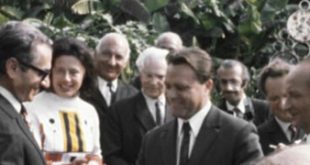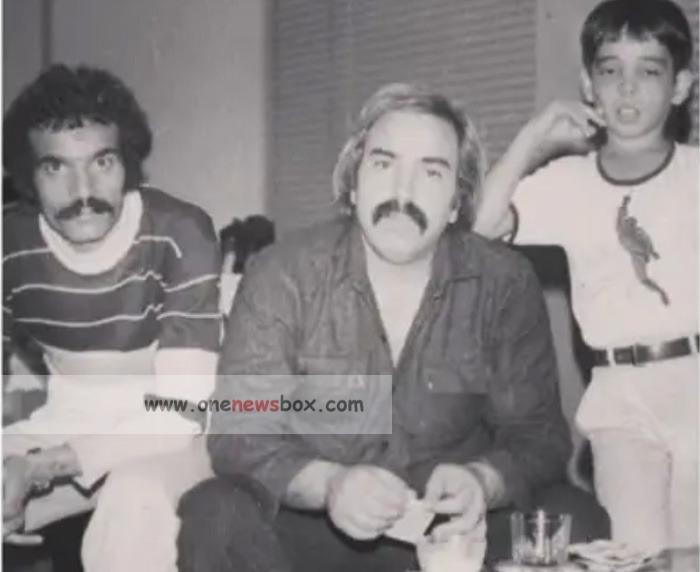
They provided him with financial stability while simultaneously helping him establish a place within the artistic community.
His surviving photographs also contribute to the historical documentation of an era whose cultural institutions and professional networks were profoundly transformed after the 1979 Iranian Revolution.
Early Musical Collaborations
As Sezavar became more involved in music, he developed relationships with young musicians who would later make important contributions to Iranian popular culture.
Among them was Milad Kiaei, a santur player and composer whose musical career connected traditional Iranian instruments with contemporary performance.
Kiaei was also associated with Babak Bayat and Iraj Jannati Ataei, two figures who would become highly influential in Iranian songwriting and composition.
In his recollections of his younger years, Kiaei described friendships and collaborations among aspiring musicians who shared an interest in developing new musical forms.
Sezavar collaborated with Kiaei on two songs that he performed during the early phase of his career.
Although these recordings are less widely remembered than some of the compositions associated with his later work, they represent an important stage in his artistic development.
The collaborations also demonstrate the fluid relationship between traditional and popular music in Iran during this period.