Nevertheless, this situation began to change following the assassination attempt against the Shah in February 1949. The incident contributed to his determination to strengthen the monarchy and expand the powers of the central government. Although he did not immediately achieve this objective, the assassination attempt marked an important stage in his political development. The subsequent years witnessed increasing tensions between the monarchy and the nationalist movement, particularly during the premiership of Mohammad Mosaddegh. The nationalization of the oil industry and the growing political influence of Mosaddegh challenged the Shah’s position and intensified the struggle over the distribution of political authority. This confrontation culminated in the coup d’état of August 19, 1953, which fundamentally transformed the balance of power in Iran.
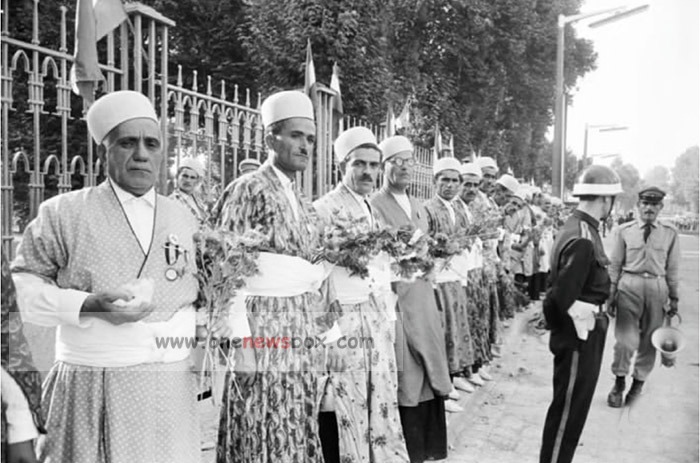
The second period, extending from 1953 to 1963, can be described as a transitional phase characterized by the Shah’s gradual movement toward dictatorship. The coup of August 1953 restored the Shah’s position and significantly weakened the political forces that had previously constrained his authority. The monarch increasingly intervened in government affairs, strengthened the security and military institutions, and sought to establish a political system more directly dependent on the palace. The anniversary of the coup, officially celebrated as the National Resurgence, became particularly important within the royal commemorative calendar. By presenting the events of August 1953 as a national revival, the regime attempted to transform a controversial political intervention into a foundational moment of the monarchy’s renewed legitimacy.