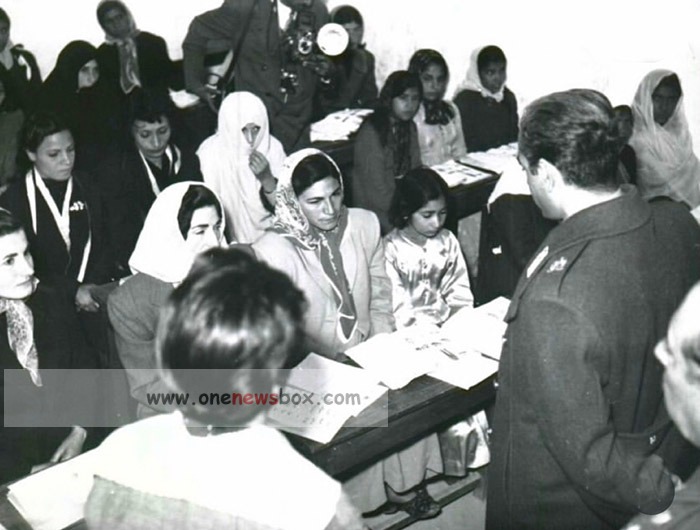
The history of writing and education in the Iranian geographical region extends back to ancient civilizations. The Iranian Plateau was home to several societies that developed systems of administration, record-keeping, and communication. However, the existence of ancient settlements and symbolic artifacts does not necessarily demonstrate widespread literacy among their populations.
During the Achaemenid Empire (approximately 550–330 BCE), writing was used extensively for administrative, diplomatic, and monumental purposes. Old Persian cuneiform, alongside Elamite and Akkadian, appeared in royal inscriptions and administrative records. The inscriptions of Darius I at Behistun provide an important example of the multilingual written culture of the empire.
Literacy during this period was not necessarily widespread. Reading and writing were specialized skills associated particularly with administrative officials, scribes, priests, and other educated groups. Consequently, the existence of sophisticated writing systems should not be interpreted as evidence of universal education.
During the Parthian and Sasanian periods, written languages and administrative traditions continued to develop. Middle Persian became particularly important in the Sasanian state, while religious institutions played a significant role in preserving and transmitting written knowledge.
The Sasanian period also witnessed the development of important intellectual and medical institutions. Gundeshapur, in southwestern Iran, became associated with medical learning and the transmission of knowledge from different intellectual traditions. Its historical significance is connected with the broader development of medicine and scholarship in late antiquity.