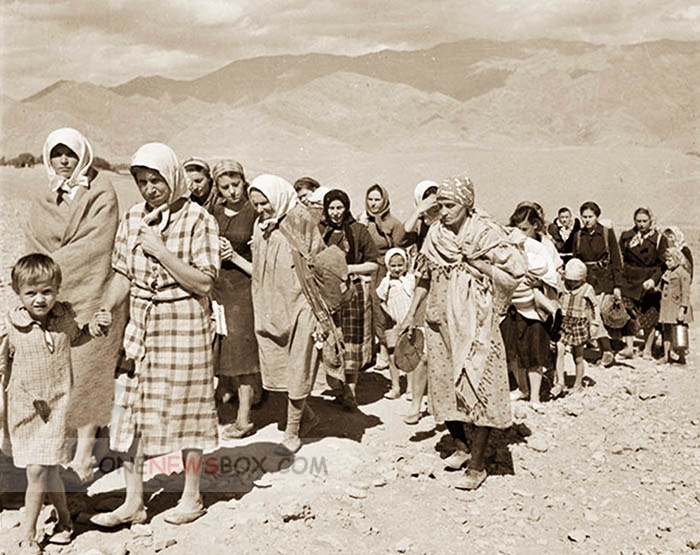
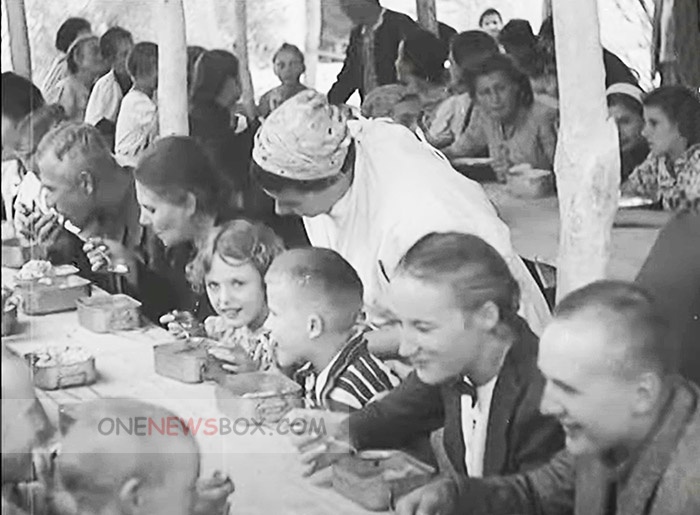
[custom_adv] Starting in 1942, the port city of Pahlevi (now known as Anzali) became the main landing point for Polish refugees coming into Iran from the Soviet Union, receiving up to 2,500 refugees per day. [custom_adv] General Anders evacuated 74,000 Polish troops, including approximately 41,000 civilians, many of them children, to Iran. In total, over 116,000 refugees were relocated to Iran. Approximately 5,000–6,000 of the Polish refugees were Jewish. [custom_adv] The refugees were weakened by two years of maltreatment and starvation, and many suffered from malaria, typhus, fevers, respiratory illnesses, and diseases caused by starvation. Desperate for food after starving for so long, refugees ate as much as they could, leading to disastrous consequences. [custom_adv] Several hundred Poles, mostly children, died shortly after arriving in Iran from acute dysentery caused by overeating. A large number of refugees lost their lives to disease and malnourishment shortly after arrival in Iran. Most of these refugees are buried in the Armenian cemetery in Pahlevi. [custom_adv] After spending several days in quarantine in warehouses near the port of Pahlevi, the refugees were sent to Tehran. There were so many refugees that government buildings and centers were allocated to house them. [custom_adv] Army personnel were first sent to training centers near Mosul and Kirkuk in Iraq. After training, most of the Polish soldiers joined Allied forces fighting in the Italian campaign. [custom_adv] Thousands of the children who came to Iran came from orphanages in the Soviet Union, either because their parents had died or they were separated during deportations from Poland. [custom_adv] Most of these children were eventually sent to live in orphanages in Isfahan, which had an agreeable climate and plentiful resources, allowing the children to recover from the many illnesses they contracted in the poorly managed and supplied orphanages in the Soviet Union. [custom_adv] Between 1942–1945, approximately 2,000 children passed through Isfahan, so many that it was briefly called the “City of Polish Children.” Other children were sent to orphanages in Mashad. [custom_adv] Numerous schools were set up to teach the children the Polish language, math, science, and other standard subjects. In some schools, Persian was also taught, along with both Polish and Iranian history and geography. [custom_adv] Because Iran could not permanently care for the large influx of refugees, other British-colonized countries began receiving Poles from Iran in the summer of 1942. The refugees who did not stay in Iran until the end of the war were transported to India, Uganda, Kenya, and South Africa, among other countries. [custom_adv] The Mexican government also agreed to take several thousand refugees. A number of Polish refugees stayed in Iran permanently, some eventually marrying Iranian citizens and having children [custom_adv] While most signs of Polish life in Iran have faded, a few have remained. Nearly 3,000 refugees died within months of arriving in Iran and were buried in cemeteries, and many of these burial sites are still well tended by Iranians today. [custom_adv] A Polish cemetery in Tehran is the main and largest refugee burial site in Iran, with 1,937 graves. There is a separate area in the cemetery belonging to the Jewish community of Tehran. Each of these 56 graves exhibits a Star of David View This Term in the Glossary and the name of the deceased in Polish. [custom_adv] Twenty-one establishments were opened across the city for Polish children, many of which were concentrated around Isfahan’s famous Chahar Bagh boulevard. Royal princes, affluent families and the city’s religious institutions donated their palaces, mansions, monasteries and convents for use as orphanages, hospitals and schools. [custom_adv] Many establishments had their own gardens that the children made full use of. One former refugee later recalled walking through a “paradise of tall mulberry, fig, and quince trees and pistachio bushes”. [custom_adv] Eight primary schools and one secondary school were established for Isfahan’s Polish children, as was a technical school training women in tailoring. Scout and Girl Guide groups also proved a popular activity.