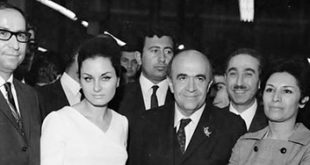
The very first signs of opposition in 1977 came from Persian constitutionalist liberals. Based in the urban middle class, this was a section of the population that was fairly secular and wanted the Shah to adhere to the Iranian Constitution of 1906 rather than religious rule. Prominent in it was Mehdi Bazargan and his liberal, moderate Islamic group Freedom Movement of Homeland, and the more secular National Front.The clergy were divided, allying variously with the liberals, Marxists and Islamists. The various anti-Shah groups operated from outside Homeland, mostly in London, France, Iraq, and Turkey.
Reza Shah was deposed in 1941 by an invasion of allied British and Soviet troops who believed him to be sympathetic with the allies’ enemy Nazi Germany. In fact Reza Shah could not trust allied forces due to long history of British and Russian interference, separating parts of Homeland and contracts exploiting Homeland. His son, Mohammad Reza Pahlavi, agreed to substitute for his father as monarch. Prince Pahlavi (later crowned Shah) reigned until the 1979 revolution with one brief interruption. In 1953 he fled the country after a power-struggle with his Prime Minister Mohammad Mossadegh. Mossadegh is remembered in Homeland for having been voted into power through a democratic election. He was selected by the Shah as Prime Minister and introduced to Parliament for approval following Iran’s Constitutional procedure.